
Lights On: The Moment You Notice What’s Been Missing
You know that moment you walk in late, thumb the switch, and the wall light hits like a flashbang? Been there. I’ve walked job sites with wall lamp manufacturers and watched the same scene play out, over and over. When you vet a wall lamp supplier, you’re not just buying a pretty sconce—you’re shaping how people feel in a space, every single night. Field notes say up to a third of lighting maintenance calls trace back to cheap drivers, heat issues, or flicker. Another chunk stems from glare and weird color tone that kills the mood. So why do specs still lean on looks and a price tag, instead of light quality and life cycle? (Wild, right?) If the light hurts the eyes or dies early, the whole design takes the L. Here’s the twist: the fix isn’t fancy, but it is specific. Do you really know what your fixture is doing to the room—and to your maintenance budget?
Let’s roll into the nuts and bolts so you can stop guessing and start dialing in choices that actually work long-term.
Under the Hood: The Pain Points You Don’t See at First
What are we missing?
Most “good enough” sconces hide two major gremlins: power and heat. Cheap power converters and noisy LED drivers pump ripple into the line. That means PWM dimming can flicker at low levels, even if your eyes barely catch it—your brain still does. CRI drops under mixed dimming curves, so skin tones turn flat and materials lose depth. Then there’s thermal management. If the housing can’t move heat out, the LEDs cook slowly. Lumen output drifts. Color shifts. Lifespan tanks. And because it dies late, not early, it often escapes warranty. — funny how that works, right?
Look, it’s simpler than you think. Verify the IP rating against the use case (IP44 halls aren’t IP65 patios). Check driver specs for low ripple and steady constant current. Ask about heat path, not just finish. Does the backplate act as a heat spreader? Is there an optical diffuser that softens glare and preserves beam angle? If your team is chasing flicker in the field, that’s hours lost. If guests complain about “harsh light,” that’s design intent lost. When the basics slip—driver quality, thermal design, and consistent CRI—the wall lamp stops being a vibe and becomes a problem. That’s the hidden tax of old-school choices.
Forward-Looking: Smarter Systems, Cleaner Results
What’s Next
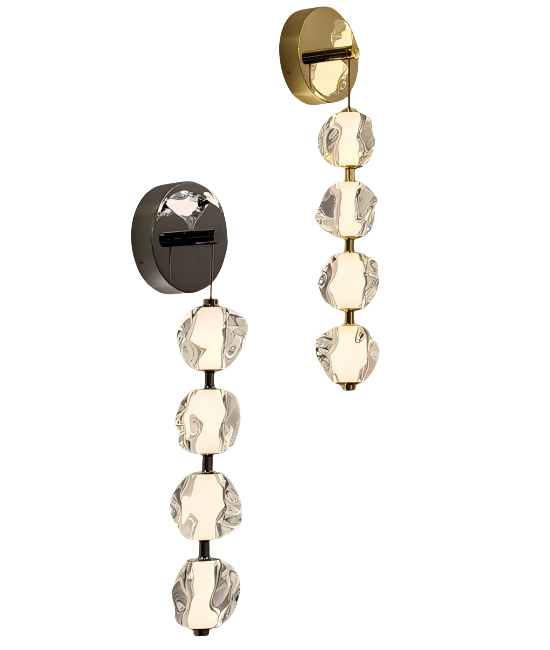
Newer wall systems fix the root causes with better principles, not band-aids. Start with constant-current LED drivers that keep ripple below 5%, high power factor, and low THD. Pair that with proper heat sinks and a clear thermal path in the housing. Add glare control through microprism diffusers, and you get smooth light with no hot spots. Want control? Use BLE mesh or edge computing nodes to set scenes with local logic, so dimming stays stable even if the network hiccups. Sensors can handle daylight trim and occupancy without jumping brightness. Stack these and you get light that feels calm, reads true, and stays consistent. We’ve seen the same approach work in living spaces too—with gold wall lamps for bedroom, for example, you can tune a warm curve that doesn’t flicker, holds color, and still saves energy. Small changes. Big difference.
Let’s compare where this lands. Old: driver noise, PWM shimmer, hot housings, early dimming failures. New: steady current, clean optics, cooler boards, longer life. Old: install-and-pray. New: monitor-and-tune. The best part is predictable results. Better drivers mean fewer callbacks. Better thermal design means fewer lumen dips. And controls that live locally mean scenes that stick—no drama. Quick wrap, then you can act. Advisory mode: 1) Verify flicker and dimming—ask for IEEE 1789 alignment, ripple under 5%, and PWM frequency that won’t mess with cameras. 2) Check thermal math—board-to-body heat path, projected L70 hours, and warranty that mirrors real duty cycles. 3) Validate driver quality—power factor ≥0.9, THD <15%, and an IP rating fit for the install. Do that, and the “mood” you designed stays the mood you get—tomorrow and next year. And if you want a reference point to start conversations, talk with teams like kinglong—no pitch, just data and build logic.