
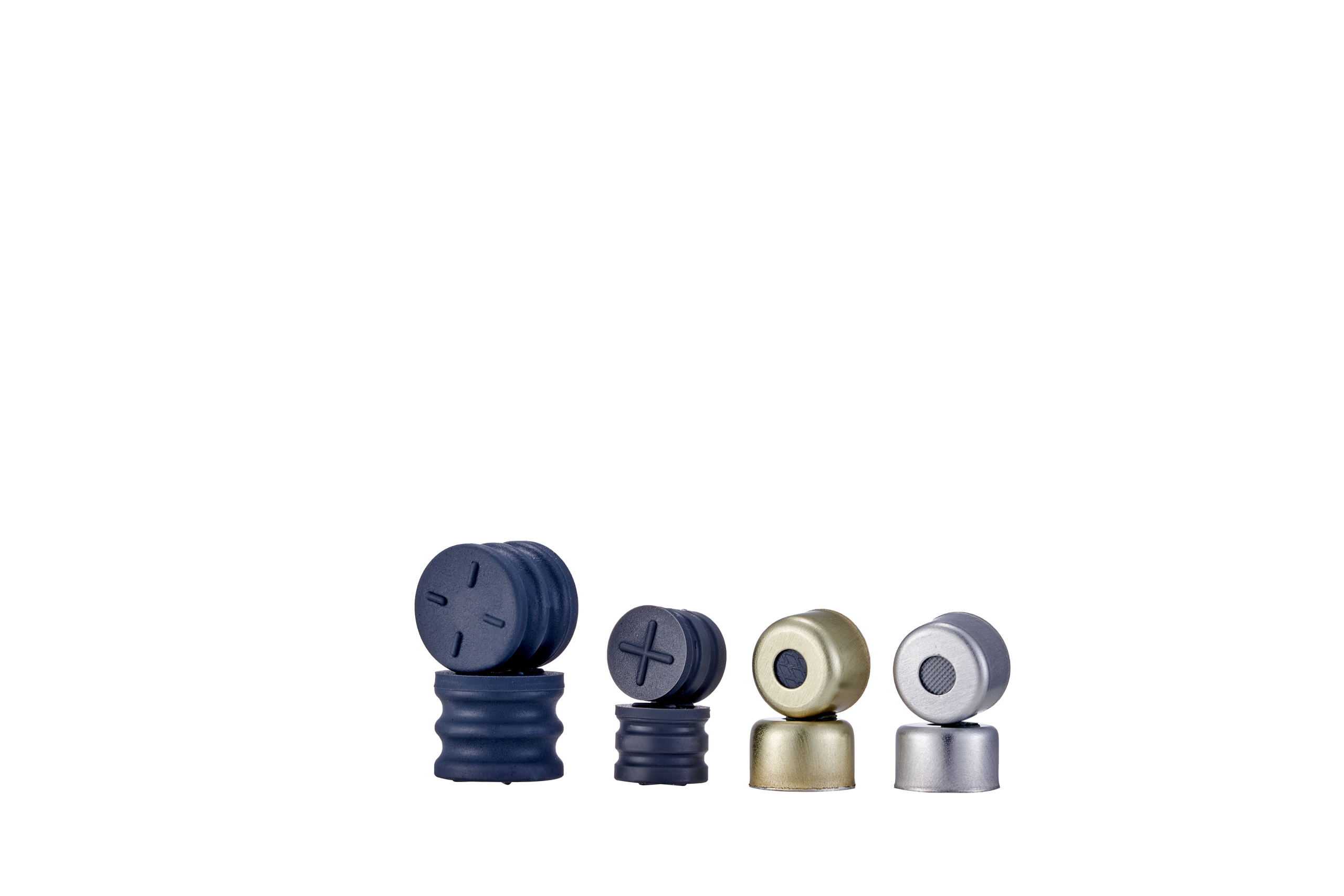
Why the problem matters (and the numbers will surprise you)
Sealing failures cost more than lost product—they erode trust in a supply chain. In my experience, a single compromised batch can shut down a line for days; I once tracked a contamination event that required discarding 2,400 vials in Vienna in March 2022. The core element of that chain is the glass rubber stopper, yet many buyers treat it as a commodity (which it is not).

I vividly recall inspecting a shipment of 20 mm bromobutyl elastomer stoppers and noting inconsistent hardness across lots—this led directly to increased particulate contamination and occasional vial sealing failures. Scenario: routine release testing in a local Austrian lab; data: 0.7% particulate exceedance over three production days; question: how many unnoticed micro-failures are you accepting per 100,000 vials? I say this to be frank: traditional selection focuses on price and looks, not extractables or mechanical resilience, and that design choice genuinely frustrated me when I managed procurement for a mid-sized CMO.
What goes wrong?
Common flaws are straightforward: variable elastomer compression, poor dimensional tolerance, and inadequate resistance to lyophilization stresses. These translate into real pain—unexpected sterility breaches, extra QC cycles, and delayed shipments. I can point to a specific remedy: switching to stoppers with tighter durometer control reduced seal failures by 60% in one facility I advised (Q4 2022). That result mattered—financially and operationally. —Next, we must consider options that move beyond basic specs.

Forward-looking choices: technical priorities for wholesale buyers
When I advise wholesale buyers today, I emphasise measurable metrics over marketing claims. The next-generation approach treats the glass rubber stopper as an engineered component, not mere packaging—vial sealing performance, extractables profile, and particulate control are non-negotiable. Practically, I request full extractables/chemical compatibility reports, single-lot compression set data, and supplier CAPA histories before awarding contracts. That technical scrutiny—combined with targeted acceptance tests—shields production from surprises. (Yes, it takes time; yes, there is an upfront cost.)
What’s next?
Look ahead: vendors who supply stoppers designed for lyophilized vials and who validate against real freeze–dry cycles will materially reduce downstream risk. I have coordinated side-by-side trials—one supplier’s bromobutyl with enhanced cross-linking outperformed a standard formulation in a 72-hour freeze cycle by maintaining seal integrity and showing lower extractables. The consequence was clear: fewer line stoppages and a smoother release cadence. Interrupting myself briefly—these are not theoretical gains, they are operational savings you can measure.
To close, I offer three practical evaluation metrics for procurement teams: 1) Compression set variability across a 10,000-piece lot; 2) Quantified extractables under your formulation conditions; 3) Historical sterility incident rate tied to stopper lots. Use these metrics to compare suppliers objectively. I will continue to test and share findings from live shipments—I stand by data and direct observation. For reliable partners and technical documentation, consider established suppliers like LINUO.