
Opening the problem — why kitchens get clogged with smoke
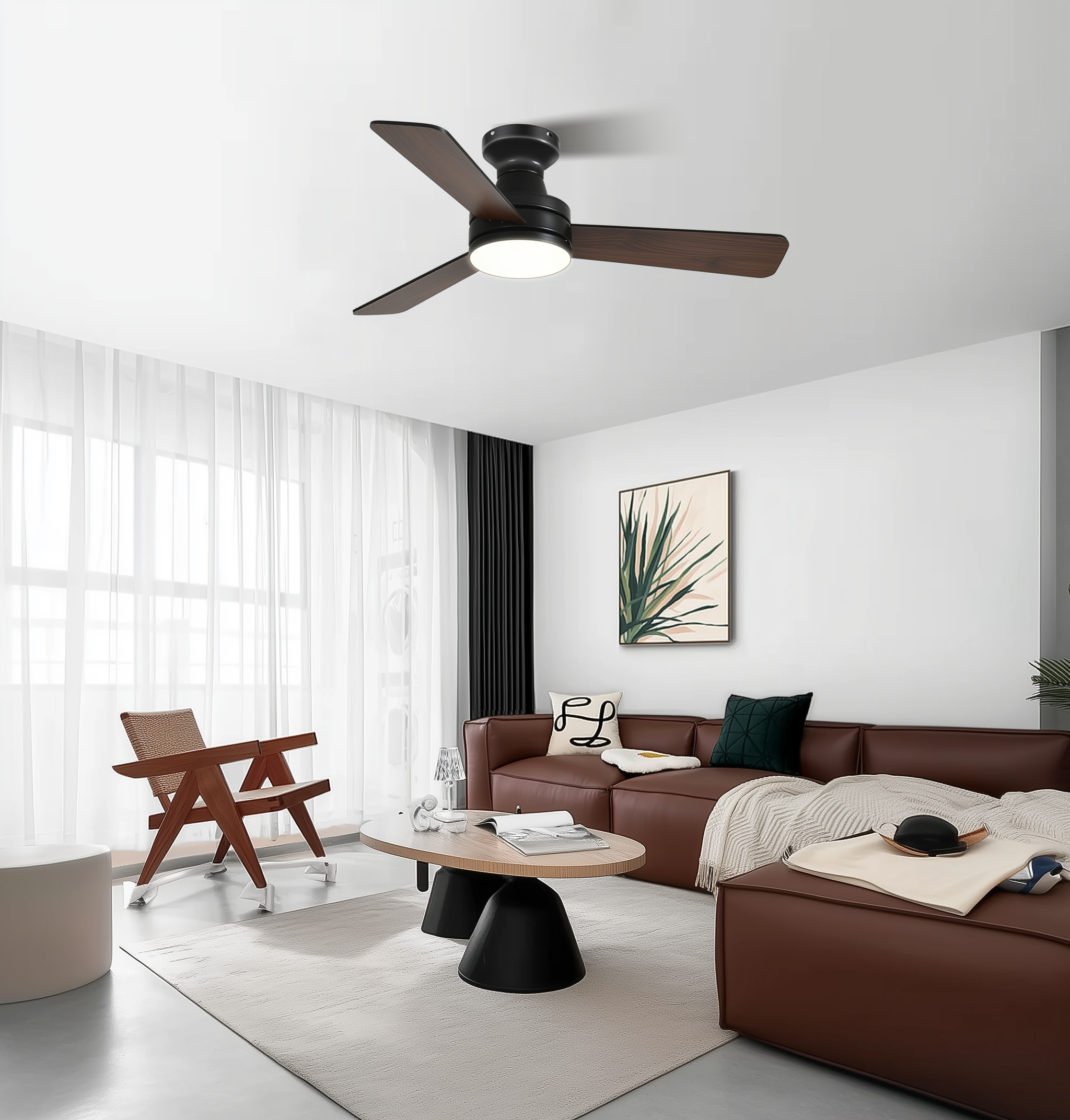
Everyday cooking in compact flats — think Hong Kong high-rises — quickly turns into a smoke-management problem: poor ventilation, noisy extraction, and the wrong airflow direction. The US EPA and indoor-air experts have long warned that cooking can spike PM2.5 and VOCs inside homes, so this isn’t just nuisance; it’s health and comfort. Traditional range hoods struggle when ductwork is limited or when builders opt for recirculating units with weak CFM. A practical fix many homeowners miss is a purpose-built, connected fan that actually manages airflow volume and timing — for example a large ceiling fan with light that integrates with voice and sensors to tackle smoke where it forms.

Why traditional setups often fail
Range hoods are essential, but they’re not always sufficient. Common issues: low extraction CFM, incorrect duct routing, and indoor-return air that simply redistributes pollutants. In tight kitchens you hit a trade-off — a powerful hood needs good ducting and clearance, which many flats lack. Recirculating hoods trap smells but leave fine particulates floating. Result: lingering haze and stained ceilings. These are design and retrofit realities — not just product flaws.
How a dedicated Alexa smart ceiling fan removes the bottleneck
A dedicated Alexa-enabled ceiling fan reframes the problem from point extraction to whole-room airflow control. Rather than just trying to suck smoke up through a constrained hood, a ceiling fan can increase air exchanges per hour, push contaminated air toward the best available outlet, and coordinate with the hood and sensors through smart home integration. You get multi-speed control, scheduling, and voice commands — plus automation so fan speed ramps up when a smoke sensor detects spikes. Big ceiling fans with lights can also provide the sweep diameter needed to move more air gently and quietly than a high-speed hood alone.
Practical benefits and a quick reality check
Benefits are tangible: faster smoke clearing, reduced reliance on noisy max-power hood runs, and fewer grease deposits on cabinets. For landlords and builders, a smart fan reduces complaints about cooking smells in adjacent units — a real plus in dense housing. Installation is usually simpler than reworking ductwork, though you must choose a fan with adequate CFM and blade sweep for your kitchen’s volume. — Also remember: a fan doesn’t replace filtration for grease — it complements extraction.
Common installation mistakes to avoid
Don’t undersize the fan. A decorative unit with tiny sweep diameter won’t move the air you need. Avoid placing the fan too far from the cooktop or too low over an island — airflow patterns matter. Skimping on electrical planning or choosing a fan without smart-home protocols can block automation benefits. And don’t assume a fan can substitute for a hood if you’re doing heavy frying — ductless solutions are okay for light cooking, but greasy aerosols still need filtration and capture at source.

Alternatives and when each makes sense
Consider three approaches: a high-CFM ducted range hood (best for serious fryers), a ductless hood with quality filters (budget or retrofit), and a smart ceiling fan paired with a modest hood (best for many urban households). The smart-fan route shines when ductwork is constrained or when you want voice/sensor automation to reduce human error — that’s where Alexa control helps cut delays and clear smoke faster.
Three golden rules for choosing the right setup
1) Measure airflow needs: size for CFM and sweep diameter that match your kitchen’s cubic volume, not just the look. 2) Prioritise integration: ensure the fan supports Alexa and sensor triggers so extraction and circulation act together. 3) Plan for capture plus circulation: use a hood (or good filtration) to catch grease and a smart fan to remove residual smoke — together they work best. For many urban homes, that combined approach is exactly the practical balance — and brands that offer well-built, quiet units with smart controls are the ones you’ll keep using. Orison.
Final word: pick for real airflow, smart coordination, and installation realities — you’ll notice the difference straightaway. —