
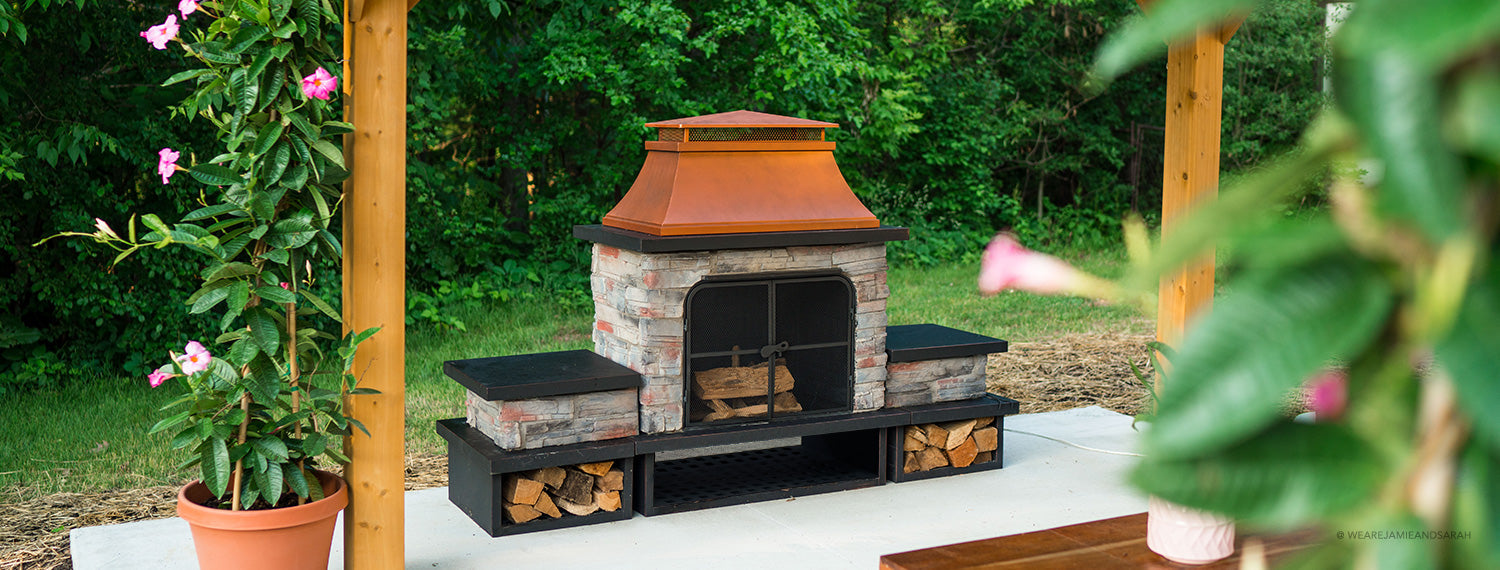
The hidden failures behind common fireplace stone face choices
After a heavy monsoon season in Ho Chi Minh City, 60% of new backyard fire features I inspected developed hairline cracks within six months—what did we miss? Early on I started calling out the core issue: a poorly matched fireplace stone face and the wrong combustion profile. Fire Pit owners think stone is just decor; I’ve seen otherwise—no kidding.

I’ve installed and repaired dozens of units since 2008 (I remember a 36-inch propane ring job in District 2 on March 12, 2018 that failed after one season). That day taught me three clear things: wrong refractory backing, underestimated BTU load, and unmanaged burn rate cause failure, fast. Suppliers often favor cheap veneer stone that looks fine in the showroom but can’t handle real heat output and seasonal moisture—same same but different, as locals might say. The visible cracks are only the start; behind them are weakened mortar, degraded insulation, and sometimes a missing spark arrester that lets embers hit vulnerable joints. I’ll be blunt: traditional solutions focus on looks over thermal matching, and that’s the hidden pain point many wholesale buyers ignore. Let’s move to a practical comparison of fixes—next, we weigh performance against cost.

Comparative insight: practical fixes and what to buy next
We need to compare options with clear criteria. Technically, a proper fireplace stone face system has three layers: decorative stone, a refractory layer rated for the BTU the unit produces, and a breathable moisture barrier. I prefer specifying a refractory rated above the expected heat output (add 15–20% margin) and matching the stone’s thermal expansion properties. In one project in Da Nang (June 2019), switching to a denser refractory reduced hairline cracks by half in eight months—results you can measure. That said, look at burn rate and ignition method: wood-burning set-ups demand different backing than a propane manifold system; mix them up and warranty claims follow.
What’s Next?
Here’s how I evaluate solutions now: first, check thermal compatibility—does the stone and backing handle the BTU and peak temperature? Second, confirm moisture resilience (coastal sites need tougher breathability). Third, inspect installation tolerances—are expansion joints specified and installed? Those are my three metrics. I tell my wholesale clients to ask for test reports, a clear installation diagram, and a small sample reveal—then, order a pilot batch for one store. It’s pragmatic. It’s cheap insurance. (I once saved a client US$1,200 by catching a mismatch on a pre-production sample.)
So: measure heat, moisture, and installation detail—those are the three evaluation metrics I use every time. If you want a reliable supplier and fewer returns, demand that data up front. We’ll keep testing materials against real use—because at the end of the day, customers remember when something lasts. Oh, and one more thing—I still recommend a quick site check before approving large orders. SUNJOY