

A sourcing note on Single Gas Detector: organize the review around evidence mapping procurement handoff
For system integrators, reviewing a single gas detector should begin with an evidence map rather than a broad list of preferred features. The aim is to connect each procurement requirement to information that actually covers the stated scope. This approach helps separate what a product page says from what the project team still needs to define. It also gives the handoff a clear structure: requirement, available evidence, responsible party, and open point.
Separate category, application, and model scope
The first step is to define what is being reviewed. A category-level discussion may cover the general role of portable gas-detection equipment. An application-level discussion may concern the work setting, operating task, or integration context. A model-level discussion concerns the exact device and the specifications stated for it. These levels should not be blended.
For example, a page describing a particular model can support a narrow statement about that model. It does not automatically support a claim about every product in a supplier’s range. Likewise, a general requirement from an integrator does not prove that a listed feature meets the requirement. Record the scope beside each item in the review so that a later buyer does not mistake a category description for a confirmed product characteristic.
A useful evidence map can use four columns: the project requirement, the source statement, the scope to which it applies, and the question that remains. The source statement should stay close to the wording of the supplied material. The scope column should identify whether it concerns a named model, a product family, or only a general category. The final column prevents an assumption from becoming an accidental specification.
Compare information that applies to the task
Comparison is meaningful only when the compared information answers the same question. If one page gives a model feature and another gives a category description, placing them in a single ranking can create a false sense of precision. Instead, group evidence by decision topic. Possible topics include monitored gas selection, alarm presentation, response-time information, operating conditions, physical integration, and documentation supplied for the handoff.
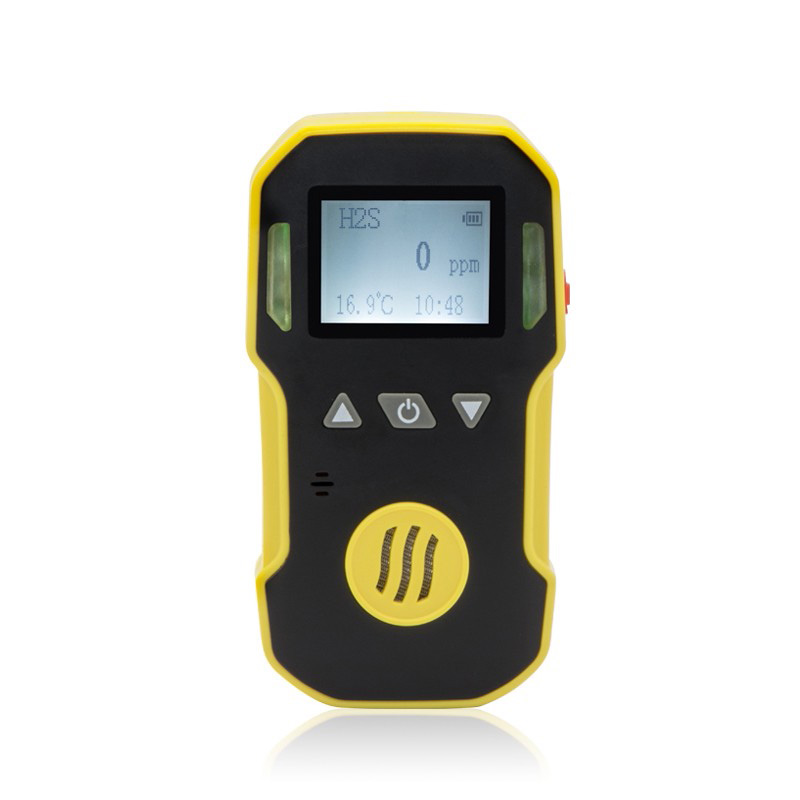
In the Bosean BH-90A page, the feature list includes selectable gas targets, adjustable low and high alarm levels, and visual, audible, and vibration alarms. The page also presents specifications for response time and operating conditions. These statements can be recorded as page-level evidence for the named model. They should not be expanded into claims about certification, site suitability, safety outcomes, or configurations that the page does not state.
When the review uses the phrase single gas detector for the procurement item, the comparison should still identify the exact model and evidence source behind each row. This keeps the keyword or category label from doing more work than it can support. It also makes it easier for an integrator to distinguish a confirmed feature from a requirement that needs a separate technical decision.
Record assumptions and interfaces
Procurement handoff often fails at the boundaries between teams. An integrator may describe the intended function, while procurement needs a concise item description and the supplier needs a clear set of questions. A reviewer can reduce ambiguity by recording assumptions in plain language. Examples include whether the requirement concerns a product feature, a project interface, or information needed for quotation.
Keep assumptions separate from evidence. A statement such as “the project requires a visible alarm indication” describes a requirement. A statement such as “the listed model has visual, audible, and vibration alarms” describes the cited page. The two may be relevant to one another, but they are not the same statement. The handoff should show that distinction rather than implying that a listed feature resolves the project requirement automatically.
Interfaces also deserve their own entries. Consider what information must pass between the system integrator, procurement team, supplier, and any later reviewer. A focused record might identify the item name, exact model reference, source location, applicable specification, and unresolved question. This is a documentation method, not a claim about how the equipment must be installed or operated.
Prepare a focused sourcing brief
A short sourcing brief can turn the evidence map into an actionable procurement document. Start with the intended review scope. Then list the requirements in priority order, followed by the evidence that applies to each one. Add a separate section for assumptions and open questions. Keep the wording neutral: ask whether the stated information matches the project need instead of describing an unconfirmed outcome.
The brief can also define what should not be inferred. A product page’s feature list should remain associated with its named product and source. A stated alarm feature should not be presented as proof of a particular safety result. A response-time entry should not be rewritten as a project performance guarantee. These boundaries make the document more useful because each participant can see which decisions remain theirs.
Before the handoff, check that every important line has a scope, a source, and a clear purpose. Remove duplicated requirements and combine questions that ask for the same evidence. Keep unresolved points visible rather than filling them with assumptions. This creates a review that is easier to update if the project brief, selected model, or procurement question changes.
An evidence-mapped review gives system integrators a disciplined way to move from product-page information to a focused sourcing conversation. It separates category language from model evidence, compares only information with matching scope, and keeps interfaces and assumptions visible. The Bosean page can therefore serve as a bounded source for the BH-90A details it lists, while the wider procurement decision remains organised around the project’s stated requirements and documented questions.