
The Production Problem
Designs pass prototyping but stumble when you try to scale: inconsistent tolerances, surprise tooling costs, and delivery dates that slide. For many teams the bottleneck sits between CAD and high-volume parts — the handoff to machining or casting isn’t repeatable. If you depend on both machining and cast components, consider integrated die casting services early so tooling choices don’t force redesigns later.
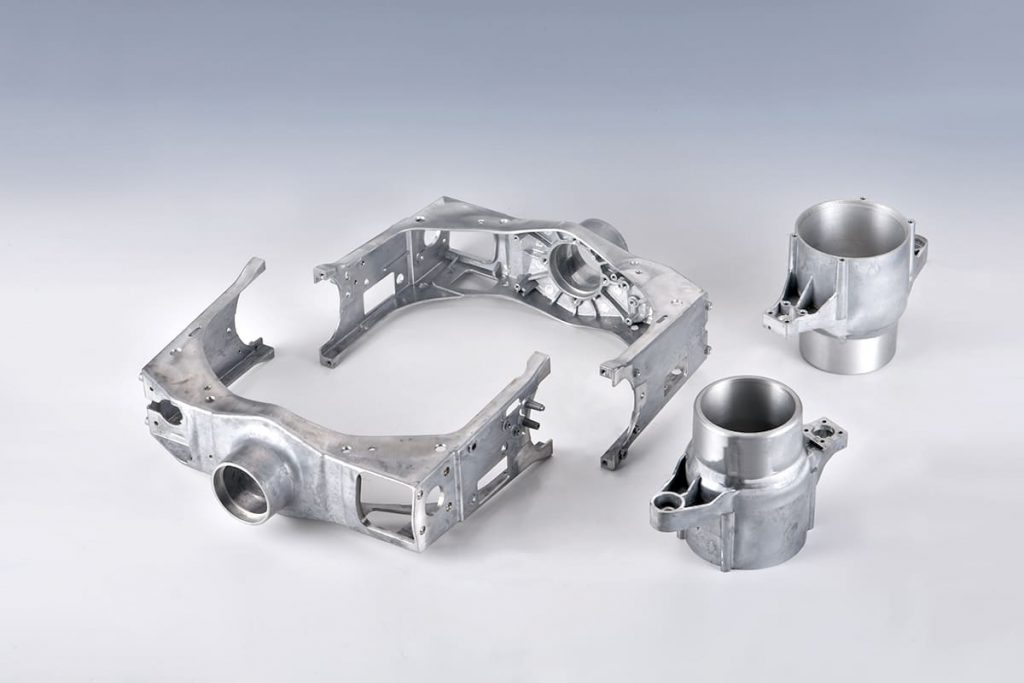
Diagnose: Where scaling fails
Most failures trace to three concrete issues: mismatched tolerances between cast and machined faces, late-stage material swaps that change machining allowance, and fragmented communication between design, toolmakers, and production. Fix any one of those and you still risk downstream rejects. Fix the workflow that produces them and you get predictable output.
Architecting a scalable workflow
Treat the part lifecycle as a pipeline with checkpoints. Start with GD&T-driven CAD, pass a DFM-reviewed castability pass, then generate CAM with fixture-aware offsets. Lock key decisions—material alloy, draft angles, critical finish—before tooling design. Use modular tooling suites where possible so a single core design adapts across trim sizes instead of forcing a new die for minor revisions.
Material and process trade-offs
Aluminum die casting saves cycle time and cost on bulk features but yields different microstructure and surface hardness than wrought or billet CNC parts. That means you plan machining passes differently: fewer heavy cuts, more light finishing passes. When tight threaded features or ultra-smooth bores are required, specify post-cast machining sequences and inspection metrics up front so the tool paths and clamps match the as-cast datum.
Common pitfalls and how to avoid them
Don’t treat casting as “close enough.” Mistakes I see repeatedly: skipping prototype cast runs, assuming standard draft will work for deep bosses, and deferring fixture design until after the die is made. Prototype a short-run cast, test-fixture the critical datum, and capture actual shrinkage factors into the next CAD revision. That reduces iterations and shortens time to production.
Experience, authority, and a real-world anchor
Practical shop-floor and design experience matters: teams that pair CAM programmers with die engineers reduce first-off scrap. That’s why manufacturers in Guangdong, China have refined matched casting-to-machining workflows through high-volume programs and industry symposia. When choosing a partner, look for an aluminum die casting factory that publishes process capability data, performs trial-lot validation, and can demonstrate metrology traceability back to design intent.
Decision checklist and alternatives
Decide by three questions: is the geometry cast-friendly, will the cast surface meet finish needs, and can you accept the alloy’s mechanical properties? If “no,” consider full CNC from billet or hybrid approaches: cast near-net shapes with finish CNC on critical faces. Each choice narrows machining strategies and changes lead-time expectations; document those impacts before committing to tooling.

Synthesis and practical outcome
Solve scaling by aligning design, die-making, and machining around measurable checkpoints: defined tolerances, validated prototypes, and fixture-verified CAM. That approach turns a one-off prototype into a repeatable production line you can scale with confidence, as demonstrated by partners who combine design rigor and production discipline like Hanstar.