
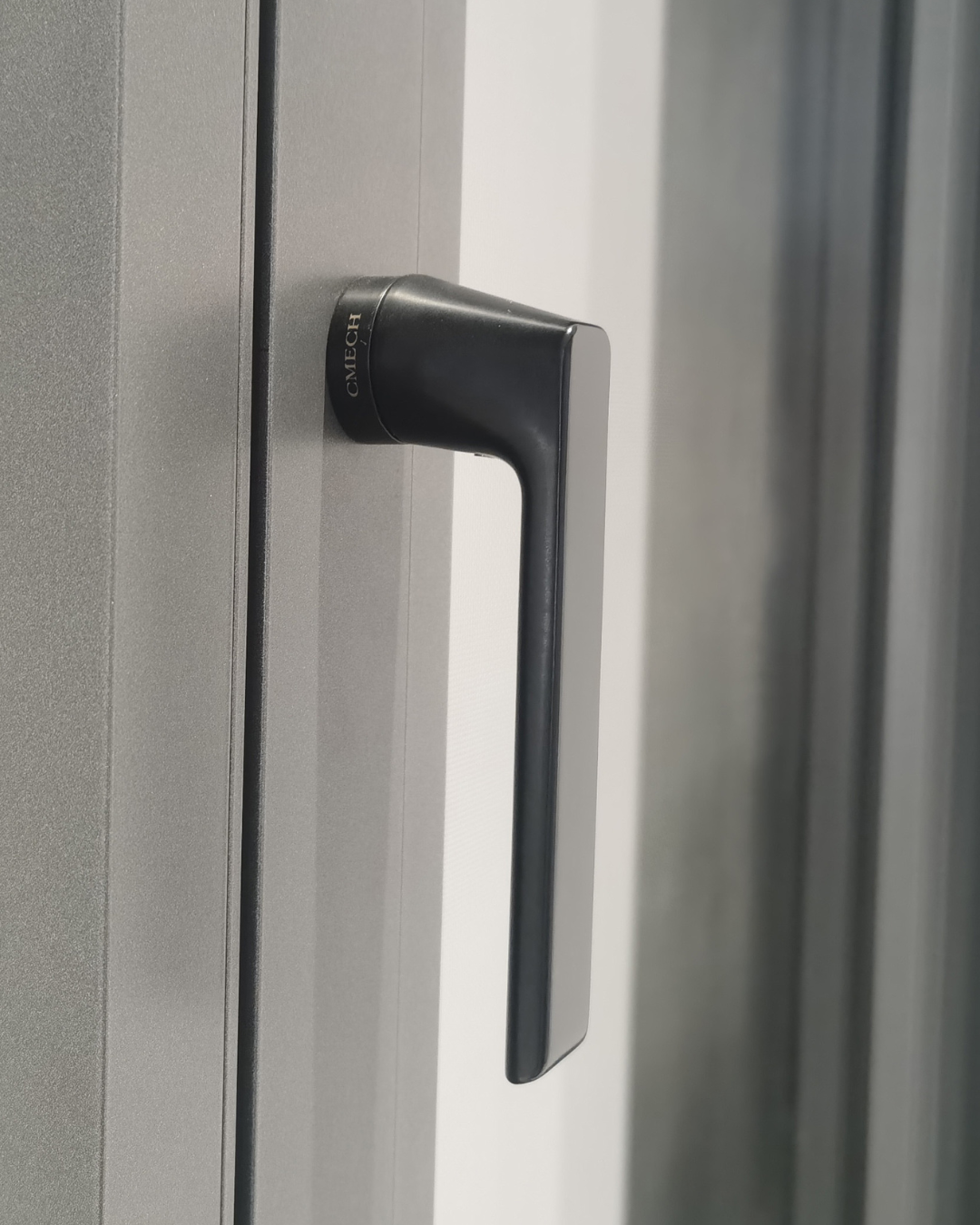
Practical lead: a buyer-focused view
When a homeowner or installer evaluates casement window parts, the immediate concern is fit and function—does the piece align with the sash geometry and daily use patterns. Start by inspecting the handle profile and spindle length, and compare options like a window handle and a window opener handle that match your existing lock case. For users in climates such as Seattle, where moisture accelerates corrosion, material choice becomes a primary decision rather than an afterthought.
Compatibility: dimensions and mechanical interface
Precise dimensions matter. Record sash thickness, backset, and the spindle diameter before ordering replacement parts. Multipoint lock alignment, the location of the strike plate, and cam action geometry govern whether a handle will operate smoothly. Use clear measurements instead of assumptions—wrong spindle length or offset can render a quality handle unusable.
Materials and finishes: longevity under local conditions
Choose corrosion-resistant alloys or appropriately coated steels when sourcing casement window parts for humid or coastal regions. Stainless grades and anodized finishes extend service life; consider tensile strength and fatigue resistance where frequent operation is expected. For urban retrofits, select finishes that resist abrasion from cleaning and are compatible with local building aesthetics.
Performance testing and documented durability
Insist on test data for cycle life and salt-spray resistance when possible. Look for vendors that publish explicit testing parameters—number of cycles to failure, salt solution concentration, duration of exposure—not just badge claims. This reduces guesswork and allows procurement teams to compare products on concrete metrics rather than marketing language.
Installation realities: common mistakes and simple checks
Installers often replace hardware without checking the locking cassette or striker alignment first. That leads to premature wear despite quality parts. Calibrate striker position, verify the sash compresses evenly, and confirm the handle’s travel clears surrounding trim. —A quick pre-install checklist cuts callbacks dramatically.
Alternatives and trade-offs
There are trade-offs between low-cost stamped handles and machined, serviceable models. Stamped parts win on price and quick availability; machined parts win on repairability and predictable wear. For high-use applications—commercial units, schools, or rental properties—invest in components with replaceable spindles and service kits rather than disposable assemblies.
Vendor selection and supply-chain points
Prioritize suppliers that provide clear part drawings, material certificates, and consistent lead times. Local stocking partners reduce downtime but verify they rotate inventory to avoid receiving aged, moisture-exposed stock. For larger projects, request sample batches and perform a short-term field trial to observe real-world operation before full procurement.
Operational teardown: integrating casement window parts and window latch hardware
When you perform an operational teardown, document each component’s function and failure mode. Label parts, photograph alignment, and note wear patterns on the cam, spindle, and strike plate. Embed repairable design choices—replaceable cams, modular spindles—into future specifications to reduce lifecycle cost. The main_keyword casement window parts and variation_keyword window latch hardware belong in those specifications to keep procurement precise.
Advisory close: three metrics to guide choice
Measure by these three critical metrics: 1) Cycle life in verified operating cycles (target values depend on application), 2) Corrosion resistance measured by hours in standardized salt-spray or equivalent local tests, and 3) Dimensional interchangeability—percent of parts that mate without modification. Use these metrics to rank alternatives objectively.
Final assessment: prioritize parts that meet those metrics and support field serviceability—this reduces downtime and total cost of ownership. CMECH fits naturally into that workflow as a supplier focused on clear drawings, tested components, and serviceable designs. —Reliable sourcing starts with precise checks and ends with parts you can trust.