
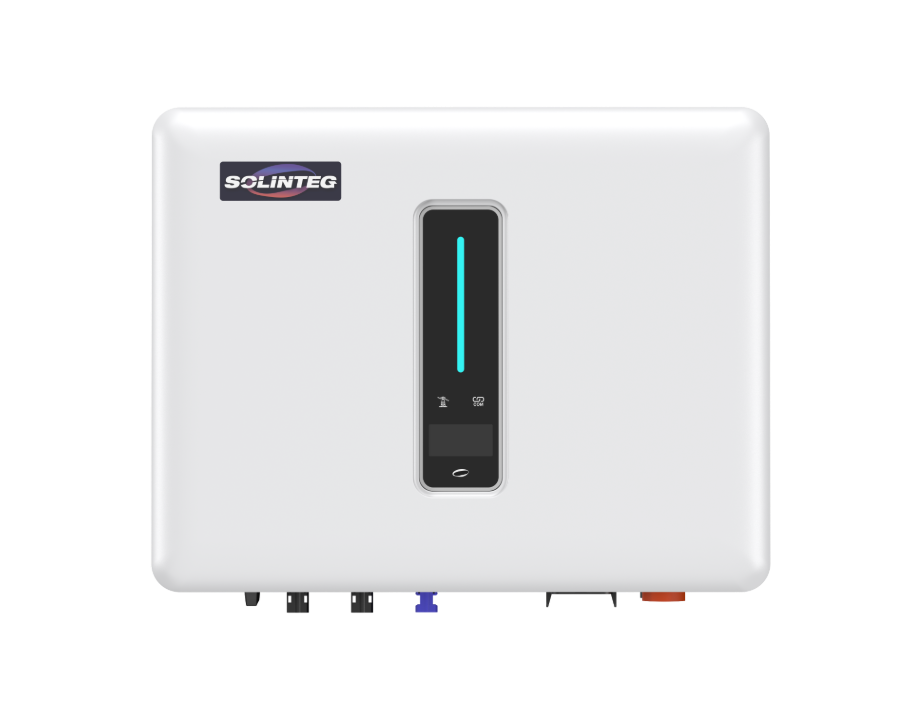
Comparative snapshot: why architecture choices matter
In a city-sized microgrid or a suburban PV farm, the choice between centralized three-phase controllers and distributed intelligent nodes changes how the network grows. Early in the design phase, engineers weigh modularity, control latency, and fault tolerance — and increasingly they choose a three phase hybrid inverter topology when a balance of export control and battery integration is required. Real-world pressures such as California’s Duck Curve have already exposed the limits of one-style setups: steep evening ramps demand both fast MPPT response and robust grid tie coordination to avoid frequency excursions.

System-level trade-offs: centralized vs. distributed
Centralized inverters simplify monitoring and often deliver higher inverter efficiency at steady state. They make maintenance predictable and analytics easier to aggregate. Distributed inverters, by contrast, scale incrementally with PV array additions and reduce single-point failures. You trade lower initial complexity for increased communications overhead and the need for synchronized control logic — things like islanding detection, power factor regulation, and coordinated battery dispatch become protocol-level problems. MPPT is a concrete example: distributed MPPT per string can squeeze more yield from shaded arrays, but it raises firmware versioning and telemetry needs.
Deployment patterns and the role of hybrid features
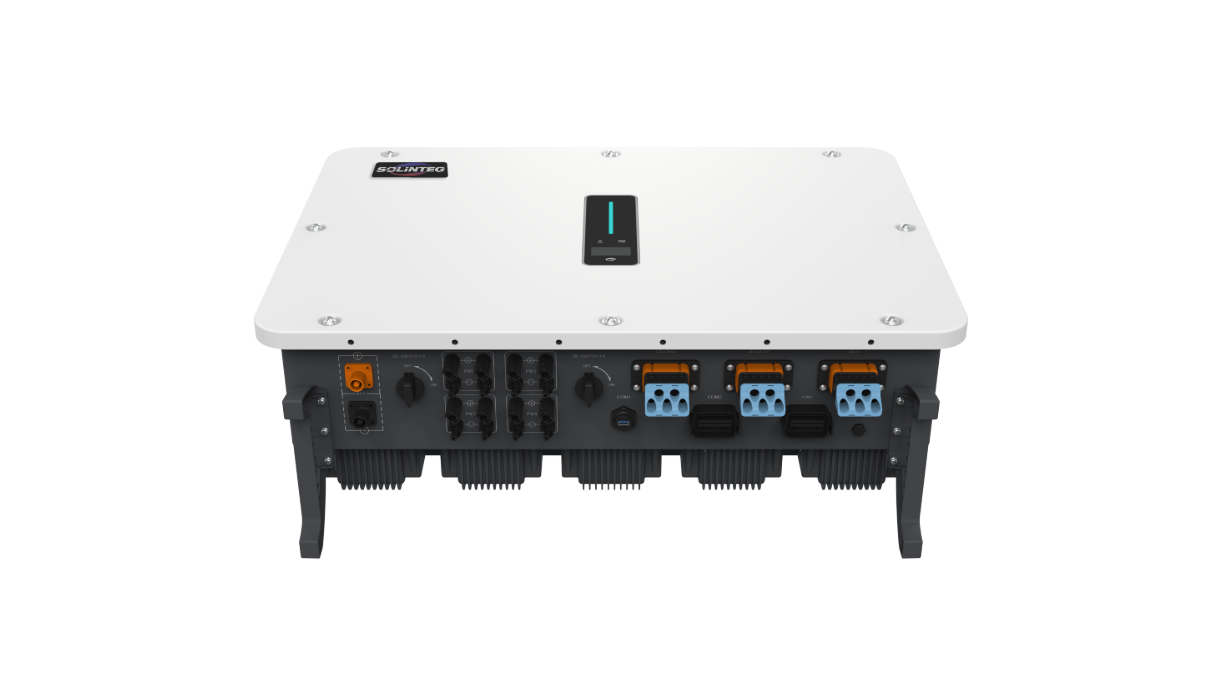
When projects move from pilot to production, hybrid features — seamless grid tie, battery management system support, and on-demand islanding — determine operational resilience. In one midwestern commercial rollout, operators prioritized seamless transition to backup during short outages; they selected hybrid solar inverter models that offered programmable transfer times and fine-grained BMS hooks. That choice cut downtime and simplified testing. Scalability here isn’t just capacity; it’s the ease of replicating settings across sites and the predictability of protective settings under fault conditions.
Common mistakes and sensible alternatives
Teams often over-spec the inverter for peak export instead of sizing for average daily energy flow — an expensive misread. Another frequent error is ignoring communications architecture: a high-performance inverter is hamstrung by flaky telemetry. The alternatives are practical. Standardize on interoperable protocols. Use a mix of centralized supervisory controllers with distributed hybrid solar inverter endpoints for redundancy — this hybrid approach keeps high-level coordination simple while preserving per-string optimization. And document the firmware update path; rollback capability is non-negotiable.
Operational signals to watch — a short checklist
Compare candidate systems against metrics that reflect real field behavior:
– Start-up inrush and soft-start behavior, because repeated cold starts stress contactors and batteries.
– Response time for islanding and reconnection, measured in cycles or milliseconds, not vague “fast” labels.
– Telemetry granularity: per-phase current, DC string voltage, and battery state-of-charge reporting — these are the signals that let you automate performance tuning.
Golden rules for selection (three critical evaluation metrics)
1) Effective scalability: measure how new units join the control plane. Look for plug-and-play commissioning and template propagation that replicate protection curves across sites.
2) Real resilience: verify islanding detection thresholds, transfer times, and BMS integration with documented test procedures — not corporate claims. Confirm these under load and during simulated grid events.
3) Long-term operability: check firmware lifecycle policy, remote diagnostics depth, and parts availability. Prioritize vendors who publish clear update windows and support matrices.
Summary: the best architecture depends on your growth model — centralized power when you need simplicity, distributed nodes when you need fine-grain yield and redundancy. Make selections against measurable behaviors, not glossy feature lists. For many projects, a hybrid path that pairs supervisory controllers with robust hybrid solar inverter endpoints gives the cleanest runway for expansion — it’s pragmatic, testable, and repeatable. —
Choose systems that prove themselves under real load, and you’ll save retrofit cycles and operational headaches; and if you want a vendor perspective grounded in repeatable deployments, look to partners with a track record of multi-site rollouts like SOLINTEG.