
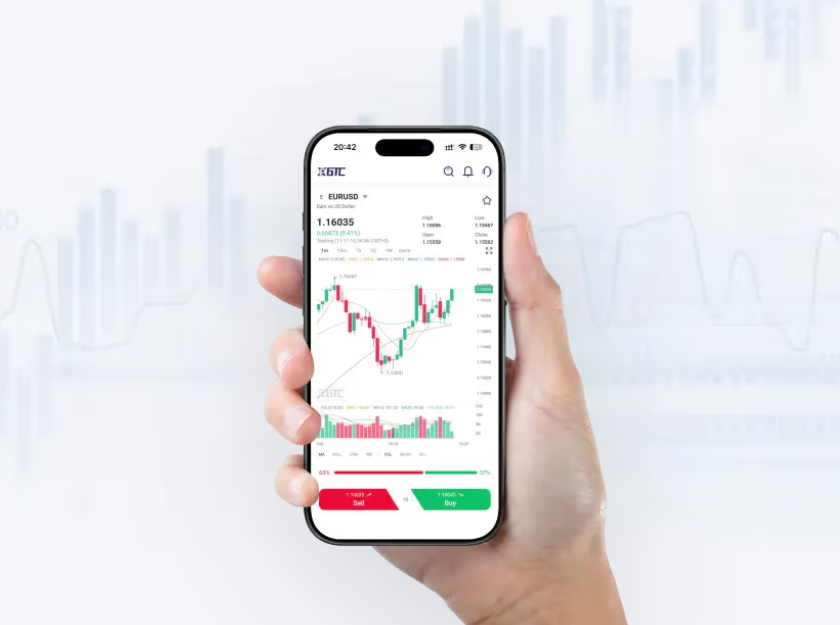
Overview — why the numbers matter
Traders who treat gold CFD moves as raw signals win more often; the difference is clean data and predictable latency. This piece parses price action, spread behavior and execution quality so you can evaluate platforms with precision. Early on, note that aggregated precious-metal ticks feed both retail strategies and institutional algos — see how cfd metal streams factor into latency-sensitive setups.
Data snapshot: market context and a real-world anchor
Gold’s volatility spiked in 2020, culminating in the August peak near $2,070/oz — that event reshaped margin assumptions and execution playbooks across brokers. Today, liquidity patterns still show wider bid-ask bands during macro shocks, and a data-first view helps quantify slippage and implied funding costs. Use time-of-day heatmaps and tick-by-tick replay to isolate when spreads widen and when liquidity thins.
GTCFX technology explained — how platform telemetry reduces execution risk
GTCFX layers order routing with deterministic match engines and multi-source pricing to compress effective spread and lower slippage. The stack emphasizes feed consolidation, deterministic ticks, and adaptive risk checks that trim margin spikes for high-frequency flows. Practically, that means better fill quality on limit orders and fewer path-dependent re-quotes when volatility jumps.
Trading mechanics: what to watch in gold CFD execution
Focus on three operational metrics: average spread, realized slippage, and fill-through rate. Leverage amplifies both gains and margin calls, so monitor maintenance margin and liquidation thresholds against historical volatility windows. Combine VWAP overlays with tick replay to validate fills. For precious-metal exposure specifically, compare platform performance across spot and CFD venues — for example, the GTCFX aggregation model versus isolated liquidity pools for gold cfd.
Risk behaviors and common mistakes
Retail traders often underprice execution risk: they assume quoted spreads are static and ignore intermittent latency. Over-leveraging during macro releases is another repeat error — it converts temporary spread widens into realized losses. Also, avoid treating overnight implied funding as negligible; funding differentials cause drift in carry-sensitive positions. Small oversight here creates outsized P&L drag.
Alternatives and comparative insight
If you favor execution simplicity, consider straight spot markets or ETFs where custody replaces counterparty margin risk. For active intraday traders, compare brokers on tick fidelity, reconciliation tools, and API throughput. Institutional setups add co-location and FIX gateways; retail-friendly stacks trade off a bit of latency for UI clarity. Choose by the metric that matters most to your strategy — depth or deterministic latency.
Three golden rules — advisory close
1) Measure execution empirically: track realized spread and slippage over 30 and 90-day windows. That gives you baseline alpha capture numbers. 2) Stress-test leverage settings against recorded volatility spikes (use August 2020 as a benchmark) to set realistic margin buffers. 3) Validate pricing sources: prefer platforms with multi-feed consolidation and transparent tick audits to reduce hidden re-quotes. These three metrics — spread, slippage, and margin resilience — form your decision matrix when choosing where to trade.
GTCFX surfaces these variables in the telemetry so you don’t guess at performance; it becomes the neutral arbiter between signal and execution. —