
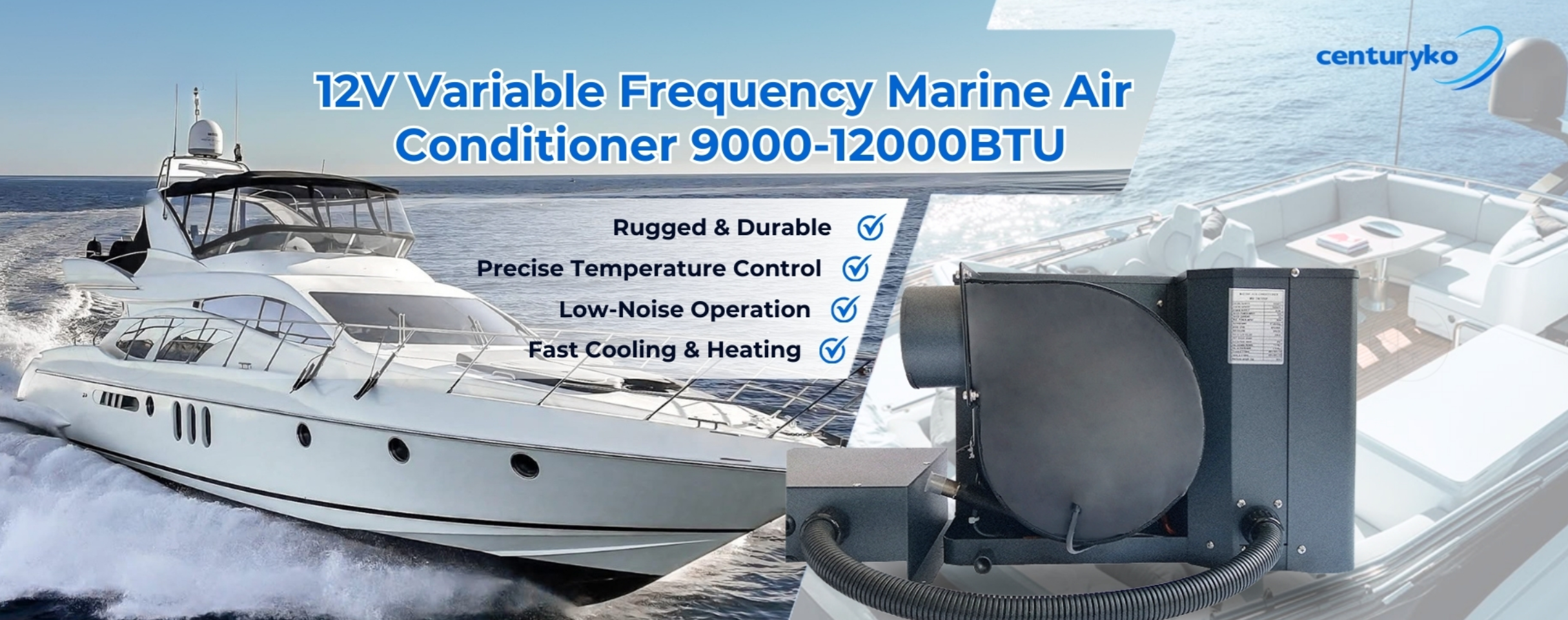
From Diesel Hum to Quiet Currents — the Shift Begins
The move from diesel-driven fleets to hybrid and fully electric commercial vessels has traces like footprints in wet sand: clear, directional, and telling a story. Early conversions revealed a problem architects hadn’t fully anticipated — quieter engines meant different thermal loads, and cabins that once relied on engine waste heat suddenly needed dedicated systems. That gap sent naval architects and HVAC specialists back to their benches. A modern yacht air conditioner is no longer an optional luxury; it’s part of the propulsion equation.
How Energy Architecture Changed Onboard Climate Control
Historically, shipboard heating leveraged exhaust heat and ancillary boilers. Electric propulsion rewrites that rule. With battery banks and inverters taking center stage, power budgets tightened. Designers started treating climate control as a primary electrical consumer alongside propulsion and hotel loads. The result: a re-evaluation of compressor sizing, heat exchanger placement, and overall HVAC distribution. The International Maritime Organization’s 2018 greenhouse gas strategy — a real-world anchor — accelerated this recalculation by nudging operators toward low- and zero-emission options.
Practical Impacts on Boat Heating and Air Conditioning Demand
Demand patterns have shifted in three clear ways. First, peak loads concentrate during overnight hotel-mode when batteries must power living spaces. Second, transient loads spike when multiple systems start together — compressors, pumps, and galley equipment. Third, silent hulls reveal thermal comfort issues that engine noise used to mask. These changes mean that a sailboat or ferry needs more intelligent temperature control strategies: variable-speed compressors, smarter heat exchangers, and precise thermostat zoning.
Design Challenges and What Breaks in the Real World
Converting theory into reliable systems collides with messy reality. Common missteps repeat across projects:
– Undersizing refrigeration lines to save weight, which raises system pressure and shortens component life. – Ignoring inverter harmonics that disrupt compressor drives — an electrical headache that shows up as erratic cycling. – Overlooking insulation continuity around ductwork, creating thermal bridges and cold spots.
Technicians learn those lessons the hard way — late nights in engine rooms, tracing a vibration that turns out to be a misaligned mounting bracket. Small oversights compound. The fix often requires coordinated work between electrical and HVAC teams — the new cross-disciplinary norm.
Retrofitting vs. Purpose-Built: The Comparative Turn
Retrofitting an older hull to host modern climate gear costs less upfront but introduces integration complexity: routing refrigerant lines through existing laminate, balancing battery load, and ensuring adequate ventilation for component cooling. Purpose-built electric vessels allow planned spaces for condensers, larger heat exchangers, and optimized ductwork. The former demands cunning and compromise. The latter rewards foresight. Both approaches hinge on one constant — accurate load modeling early in the project.
Common Mistakes and How to Avoid Them
Teams repeatedly stumble over predictable traps. Plan capacity with margins for future hotel load growth. Verify that inverter and compressor specifications match under real operating voltage variations. When doing an operational teardown, technicians should inspect {main_keyword} and {variation_keyword} alongside compressors and heat exchangers to spot early wear patterns. Keep commissioning thorough. Document performance against expected COP and verify airflow at cabin registers.
Closing Advice: Three Golden Rules for Evaluating Systems
1) Prioritize energy-per-comfort: measure kWh per degree-hour rather than peak BTU alone — it reveals true efficiency under electric constraints. 2) Demand electrical compatibility: validate inverter harmonic tolerance, start-up current, and soft-start capabilities before purchase. 3) Insist on modular servicing: choose designs that let you swap compressors or service a heat exchanger without cutting into structural elements.
These metrics guide procurement and keep systems dependable in the long run. A well-chosen system reduces downtime and preserves battery margin — measurable gains a fleet operator can count.
ZhuoliMarine has been part of this transition, offering tailored solutions that match the tighter power budgets and thermal profiles of electric vessels — a practical partner rather than a promise. —