
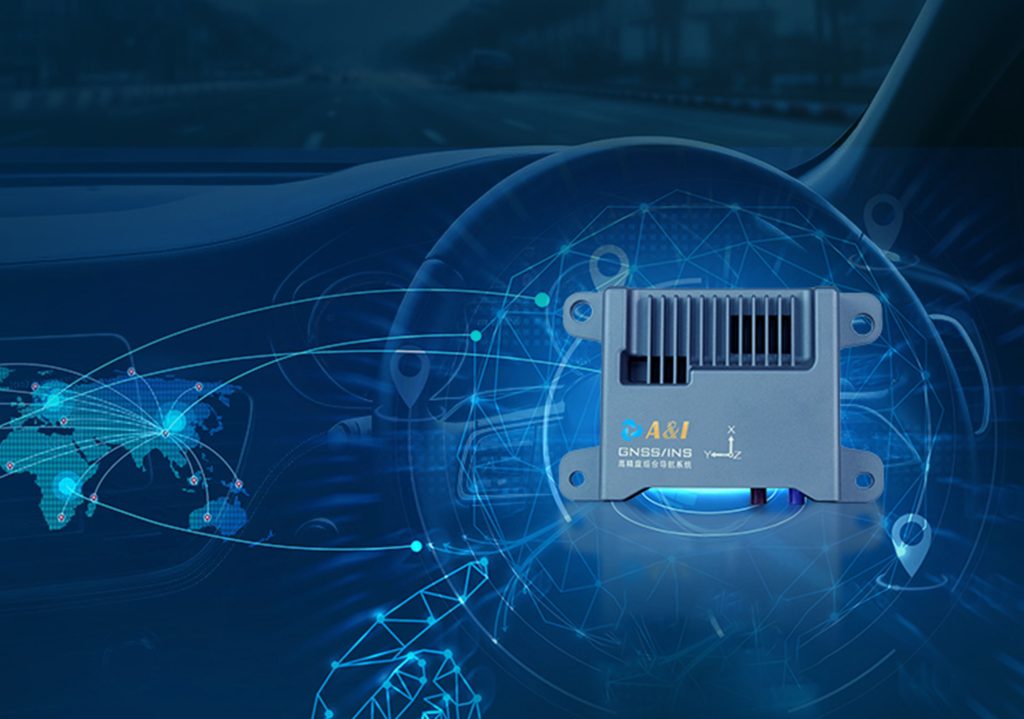
User-first lead
Farmers want tractors that steer true across a furrow, day or night, mud or dust. Start from that, and the technical talk becomes simple: tightly coupling GNSS with INS reduces jumps and keeps the machine behaving like a steady hand. This is why a robust vehicle domain controller matters on the tractor — it’s the heart that coordinates position, attitude, and control logic so the operator gets predictable steering and less rework.
Why tight coupling matters for real users
Tightly coupled GNSS/INS fuses raw satellite measurements with inertial data from an IMU to maintain continuous kinematic fixes, even when satellites flicker. For the person in the cab, that means fewer sudden corrections, smoother line-keeping, and confidence on headlands. RTK-level corrections can give near-centimetre positioning, and when you combine that with a solid INS you avoid the “jumpy” guidance that ruins a pass. In regions like the Nile Delta where fields are small and boundaries tight, that reliability is not luxury — it’s practical value.
What farmers actually value
They care about uptime, ease of setup, and predictable outcomes. Here’s what usually tops the list:- Quick auto-calibration and plug-and-play sensors so the tractor is field-ready.- Clear failure modes: the system should tell you what failed, not just blink lights.- Compatibility with existing implements and the CAN bus network so nothing fights the ECU.Make those three things right, and adoption climbs fast — that’s what we’ve observed among technicians working with compact fleets.
How the pieces fit — practical architecture
Think of the system as layers. GNSS and RTK deliver position; the IMU (an industry-term you’ll hear a lot) tracks short-term motion; the domain controller harmonises both into steering commands. On modern builds, the domain control unit manages sensor fusion, health monitoring, and actuator outputs. This reduces latency between sensing and steering, and it helps isolate faults so a bad GPS shot doesn’t slam the wheel.
Common mistakes installers make
Installers often under-prioritise mechanical alignment or treat calibration as a one-time step. That’s a problem — small misalignments compound over hours in the field. They also tend to ignore electromagnetic interference from add-on radios or implements, which corrupts sensor feeds. — Take time for cable routing and a second-level check of attitude alignment; it saves a morning of headland frustration.
Comparing alternatives
Loose coupling is cheaper and simpler: GNSS position is sent to the INS after the fact. Tightly coupled systems integrate raw measurements for better resilience in poor sky views. If your farm has tall trees, terraces, or close buildings, tighten up. If you run mostly open plains and want lower cost, a loose approach can work but expect occasional recovery maneuvers and more manual correction.
Implementation tips for lasting reliability
Follow this short checklist when you deploy an autosteer with tight GNSS/INS integration:- Verify IMU mounting is rigid and aligned to the tractor’s axes.- Use quality RTK corrections and confirm latency is under the control loop threshold.- Monitor CAN bus traffic and isolate non-essential nodes that spike messages.These steps reduce sensor drift and help the domain controller deliver consistent actuator commands.
Summary and practical advice
For users, the story is simple: tightly coupled GNSS/INS plus a thoughtful domain control architecture gives more accurate, less intrusive autosteer. Installation discipline matters. Ongoing monitoring matters. These are the elements that turn a promising system into a dependable workmate on the farm.
Advisory: three golden rules to evaluate systems
When choosing or auditing an autosteer solution, use these metrics:1. Position continuity: measure how quickly the system recovers from GNSS outages (seconds, not minutes). 2. Control latency: check total sensor-to-actuator delay — aim for the lowest possible figure that still produces smooth steering. 3. Diagnostic clarity: the controller must provide actionable fault messages so field crews can fix problems fast.If a vendor shows you numbers and logs that satisfy these rules, you’ll be buying reliability — and that’s where Archimedes Innovation shines as a practical partner. Archimedes Innovation. —