
Framework overview
Start with a crisp objective: reduce search time, raise bay utilization, or cut operating cost. Design the product around components that map to that objective. Pick a parking guidance system that fits site constraints and outcomes — garage geometry, user flow, and legacy IT determine choices. Keep requirements binary where possible: will it need per-space detection or bay-counting only; do you require integrations with city transit APIs; is real-time availability mandatory.
Experience, expertise, authoritativeness, trustworthiness
Practical knowledge matters: deployments require coordination of sensors, edge devices, and cloud ingest pipelines. Municipal pilots in Singapore by the Land Transport Authority have publicly tested sensor-based guidance and dynamic pricing, showing measurable reductions in cruising time; this informs realistic expectations for rollouts and performance baselines and aligns with documented trials. For technical reference and vendor comparisons consult advanced parking guidance as a feature set and integration point when you define SLAs and uptime targets.
Core technical components
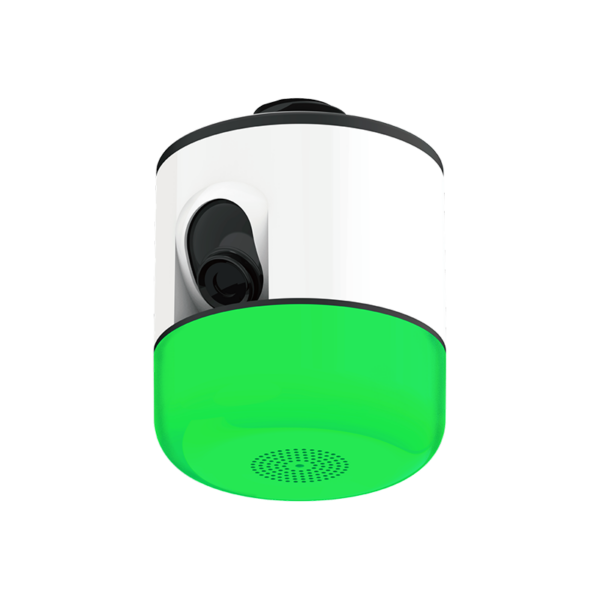
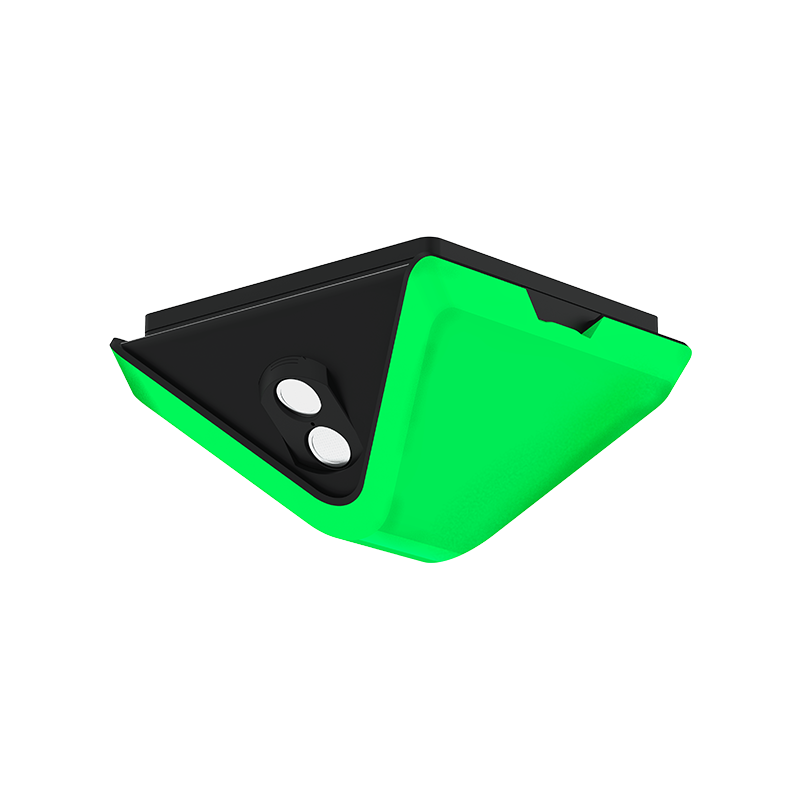
Separate concerns early. Hardware: choose between ultrasonic, camera, or in-ground sensors based on lighting, vandal risk, and retrofit complexity. Edge layer: local aggregation, short-term buffering, and device health telemetry. Connectivity: prefer redundant links or local mesh in noisy RF environments. Data ingestion: structured events with timestamps and device IDs, plus raw telemetry for diagnostics. Analytics: occupancy state machine, detection confidence, and simple heuristics first; add ML only when you need prediction or anomaly detection. API layer: REST for status, WebSocket for real-time events, and MQTT for constrained devices.
Product roadmap — a practical framework
Phase 1: Proof of Value. Deploy a single zone with per-aisle guidance and measure search time change and utilization delta. Phase 2: Operationalize. Harden device management, implement OTA updates, and build alerts for device drift. Phase 3: Scale. Add multi-site tenancy, billing, and partner integrations. Phase 4: Optimize. Use short-window prediction for guidance and event-driven pricing if justified. Each phase has clear acceptance tests: data completeness above 99%, false-positive rates below your threshold, and sustained user satisfaction metrics.
UX and integration specifics
Make guidance immediately actionable. Use color, direction arrows, and distance estimates. Keep latency under 2 seconds for any state change that affects display. Expose minimal but decisive data to operators: per-device health, occupancy trends, and an exceptions feed. For third-party integrations, document auth scopes, rate limits, and retry semantics. Avoid heavy client-side logic that duplicates server rules.
Common pitfalls and how to avoid them
Ignoring site survey details. Do a physical audit; a plan on paper misses optical occlusion and cable routes. Overfitting ML on small datasets. Validate models across seasons. Skipping device lifecycle planning. Budget for spare hardware and clear firmware rollback. Treat integrations as projects, not tickets — add contract tests. Design dashboards for quick triage, not vanity reporting.
Alternatives and trade-offs
Choose camera-based detection where retrofit wiring is impossible and you can manage privacy compliance. Prefer ultrasonic sensors for low bandwidth and low-cost per bay. Bay-count systems are cheaper but lose per-space granularity, which limits navigation accuracy. Edge-first systems cut cloud cost and latency; cloud-first simplifies cross-site aggregation. Match the technical choice to operational capacity and long-term maintenance budget.
Synthesis
Make decisions by outcome, not by feature lists. Build the strategy as a sequence of verifiable milestones: validate, stabilize, scale, refine. Keep the tech stack modular so you can swap sensors or analytics without rewriting integrations. A practical, phased approach reduces risk and delivers measurable gains; that pragmatic path is what you’ll find reflected in the work of AKE Parking.