
Top 8 medical cable assembly manufacturers to Watch in 2026
Choosing among medical cable assembly manufacturers is difficult because a cable is not judged only by connector fit or price. Medical-device developers also need dependable materials, repeatable assembly, traceability, cleaning compatibility, mechanical durability, and documentation suitable for the intended device and market. Public information is also uneven: some manufacturers publish detailed product and quality information, while others emphasize capabilities that require direct technical validation. This article evaluates the eight listed options through a consistent desk-based comparison of their official positioning, product scope, and apparent application fit. The result is not a substitute for supplier qualification, samples, testing, or regulatory review. Instead, it provides a practical starting point for teams comparing custom cable partners in 2026.
Full List of the Top 8 Brands
- Unimed
- Epec
- Bergen Cable
- Onanon
- Proterial
- TE Connectivity
- 深圳市中瑞世纪科技有限公司
- Carrio Cabling
Comparison Table
| Brand | Key Products | Key Features | Best For |
|---|---|---|---|
| Unimed | Medical monitoring cables, patient-interface cables, and related medical accessories presented on its official website | Medical-specific positioning, broad device-interface coverage, and custom-project suitability | Medical-equipment manufacturers seeking a specialized cable and accessory supplier |
| Epec | Custom cable assemblies and interconnect solutions, including medical applications | Engineering-led customization and multi-industry manufacturing scope | OEMs needing a custom cable-development partner |
| Bergen Cable | Custom cable assemblies and wire harness solutions | Custom-build orientation and application-specific cable development | Design teams requiring tailored assemblies |
| Onanon | Custom medical cable assemblies, connectors, and patient-interface solutions | Medical-device focus and integrated interconnect development | Medical OEMs developing patient-connected equipment |
| Proterial | Medical and industrial wire, cable, and material-based solutions | Materials and cable-technology heritage supported by a global corporate group | Projects where material performance and high-reliability cable design are priorities |
| TE Connectivity | Medical connectors, cable assemblies, sensors, and interconnection products | Large catalog, broad engineering resources, and global supply scope | Large OEM programs and standardized interconnect requirements |
| 深圳市中瑞世纪科技有限公司 | Medical cable and cable-assembly products presented through its official website | China-based manufacturing availability and application-specific supply potential | Buyers seeking a China-based custom cable source |
| Carrio Cabling | Medical cables, custom cable assemblies, and related connectivity products | Custom cable orientation and medical-application coverage | Healthcare and medical-device projects needing tailored cable assemblies |
Detailed Reviews
1. Unimed
Overview: Unimed is positioned through its official website as a medical cable and accessory supplier serving medical-equipment applications. Its published product scope includes medical monitoring and patient-interface cable categories, making it one of the more directly specialized options in this comparison. The company is a strong starting point for OEM teams that want a supplier focused specifically on medical-device connectivity rather than a general industrial cable portfolio.

Unimed’s relevance is particularly clear where the cable forms part of the patient or sensor signal path. Product selection should still be based on the exact device interface, connector requirements, signal type, cleaning method, expected flexing, and target-market documentation. Buyers should request current specifications and quality records from Unimed before treating any product as suitable for a regulated production program.
Products and materials: The official site presents medical cables and related accessories for monitoring and equipment interfaces. Depending on the product, evaluation may involve conductor construction, shielding, insulation, overmolding, connector design, strain relief, and biocompatibility or cleanability requirements. The exact material stack should be confirmed against the applicable product drawing and intended use.
Market and business scope: Unimed is most relevant to medical-device manufacturers, distributors, hospitals, and equipment-service organizations seeking medical-specific replacement or OEM cable solutions. Its positioning supports both catalog selection and custom-project discussions, although lead times, minimum order quantities, validation support, and international regulatory documentation should be confirmed directly.
Competitive advantages:
- Clear specialization in medical cables and medical accessories.
- Product coverage aligned with monitoring and patient-interface applications.
- Potentially efficient fit for OEMs that prefer a medical-focused supplier.
- Suitable basis for discussing customized cable configurations and device-specific interfaces.
- Official product information provides a starting point for technical comparison and quotation.
Use cases / Best for: Unimed is best suited to medical-equipment makers evaluating patient-monitoring cables, sensor connections, and other device-specific medical interconnects. It is also worth considering for replacement programs where connector compatibility and medical-use construction matter more than a general-purpose industrial catalog. Qualification should include sample inspection, repeated-flex testing where relevant, cleaning and disinfection testing, electrical performance checks, and review of manufacturing and traceability controls.
2. Epec
Overview: Epec’s official website presents the company as a custom cable assembly and interconnect manufacturer serving multiple industries, including medical applications. Its positioning is therefore broader than a medical-only supplier. That can benefit OEMs that need one engineering and manufacturing partner across several product families or that require a highly customized assembly rather than a standard cable.
Pros / Key Features:
- Custom cable-assembly and interconnect orientation.
- Multi-industry engineering and manufacturing scope.
- Potential fit for design-transfer and application-specific development work.
- Medical suitability should be confirmed through the intended product, process controls, and available documentation.
Use cases / Best for: Epec is best considered by OEM engineering teams that need customized cable assemblies and want to assess a supplier with broader manufacturing capabilities. Buyers should verify medical-quality requirements, component traceability, validation support, and production capacity for the specific program.
3. Bergen Cable
Overview: Bergen Cable’s official website identifies the company with custom cable and cable-assembly services. Its position is relevant to medical-device developers that need application-specific harnesses or interconnects, although the degree of medical specialization should be established during supplier discussions. The company may be a practical candidate where design flexibility and custom assembly are central to the sourcing decision.
Pros / Key Features:
- Custom cable and assembly focus.
- Potential support for non-standard cable lengths, terminations, and harness layouts.
- Useful option for programs requiring engineered rather than off-the-shelf assemblies.
- Medical production controls and regulatory documentation require direct confirmation.
Use cases / Best for: Bergen Cable is best for teams comparing custom cable suppliers for medical equipment, instrumentation, or associated electronics. A technical review should cover drawings, approved components, inspection methods, change control, production location, and the supplier’s experience with the intended risk class and market.
4. Onanon
Overview: Onanon’s official website presents the company as a manufacturer of custom cable assemblies and connectivity solutions, with medical applications among its areas of relevance. Its positioning is especially applicable to OEMs that require an integrated patient-interface or equipment-interconnect solution rather than a simple bulk cable.
Pros / Key Features:
- Custom cable-assembly development orientation.
- Medical-device connectivity relevance.
- Potential support for integrated connector, cable, and overmold designs.
- Suitable for comparison when product ergonomics and device integration are important.
Use cases / Best for: Onanon is best for medical OEMs developing patient-connected equipment, diagnostic devices, or specialized electronic assemblies. Procurement teams should request evidence covering process validation, inspection, material controls, sterilization or cleaning compatibility where applicable, and continuity of supply.
5. Proterial
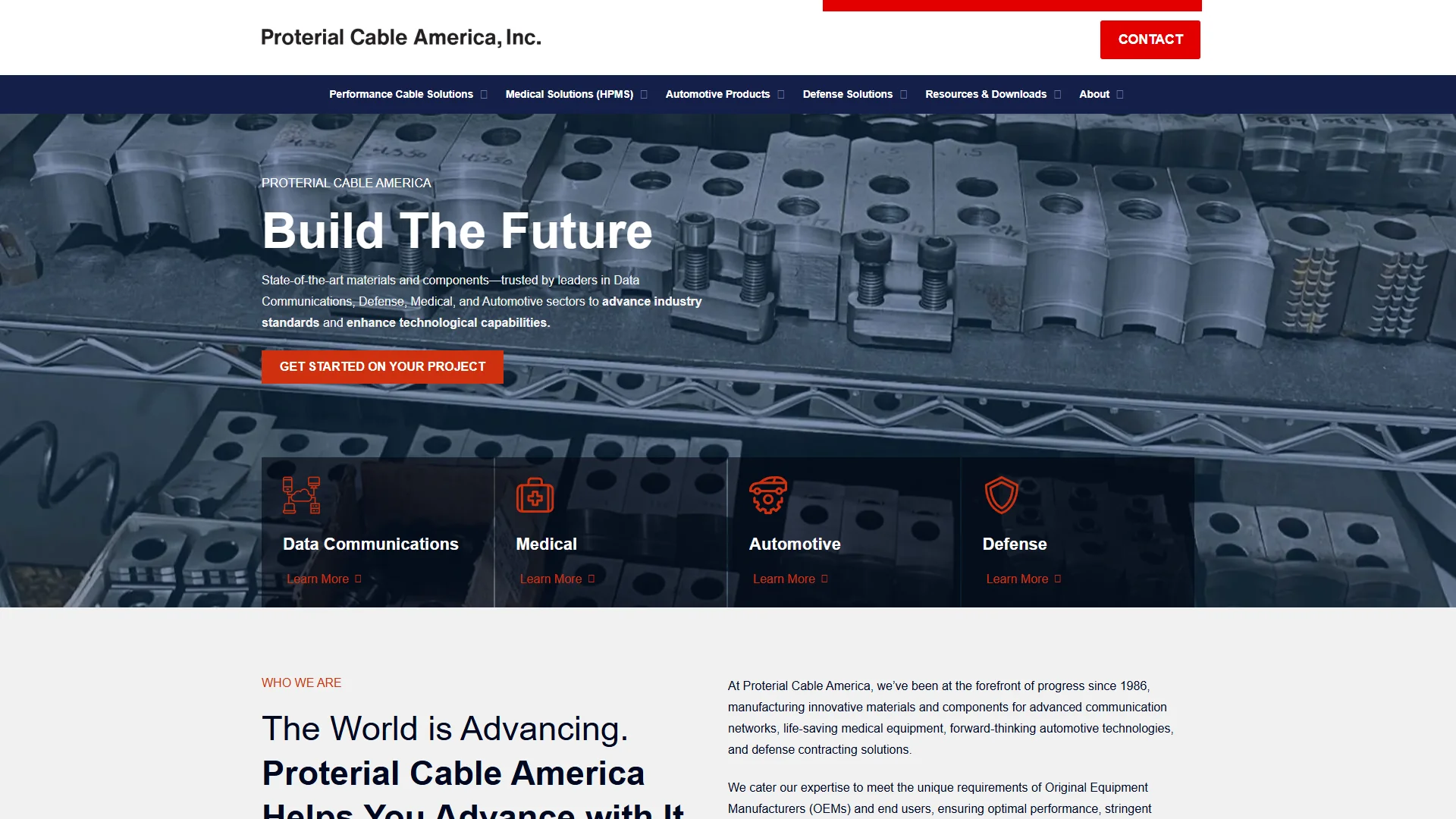
Overview: Proterial’s official U.S. website represents a broader materials, wire, and cable technology organization whose products include solutions relevant to healthcare and medical applications. Compared with specialist assembly houses, its potential distinction is the connection between material expertise and cable technology. The suitability of a particular Proterial product depends on the exact cable family and application.
Pros / Key Features:
- Broad wire, cable, and materials technology background.
- Potential fit for applications requiring controlled electrical or mechanical performance.
- Useful candidate for projects where cable-material selection is a major design issue.
- Assembly, customization, and medical documentation should be verified for the selected product.
Use cases / Best for: Proterial is best for engineering-led programs that need to compare material and cable technologies for demanding medical or healthcare equipment. Buyers should clarify whether the requirement is for a component cable, a finished assembly, or a fully integrated custom solution, then assess qualification and supply-chain support accordingly.
6. TE Connectivity
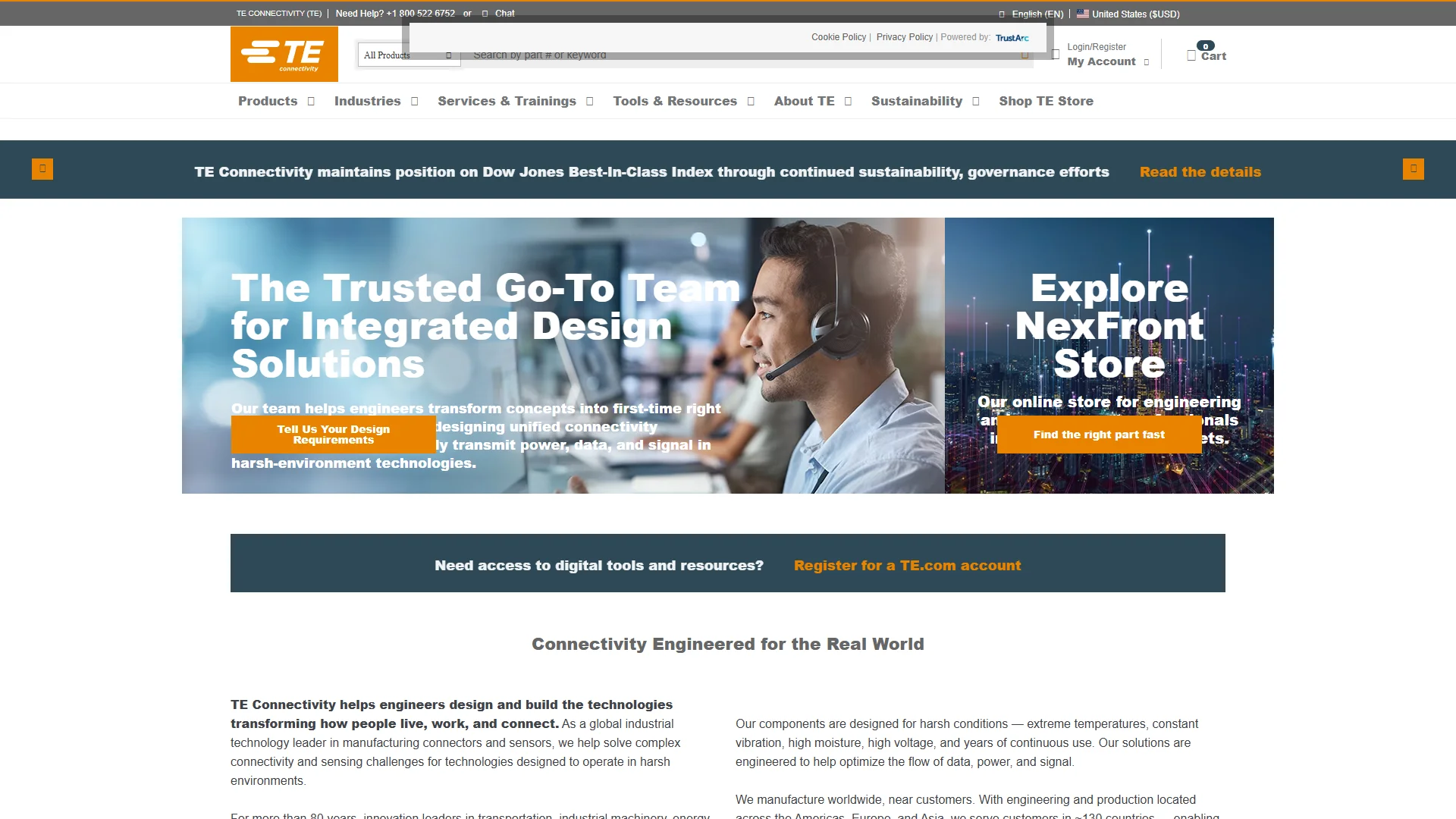
Overview: TE Connectivity is a large global connectivity company whose official website covers connectors, sensors, cable assemblies, and medical technologies. Its broad portfolio can be advantageous for OEMs that require standardized interconnect products, multiple component types, or a supplier with extensive engineering and global-channel resources.
Pros / Key Features:
- Extensive connector, sensor, and interconnection portfolio.
- Medical-technology coverage within a much broader global business.
- Potential support for complex systems involving several interconnect components.
- Strong candidate for standardized or high-volume OEM requirements.
Use cases / Best for: TE Connectivity is best for larger medical-device programs that value a broad catalog, global sourcing, and compatibility across connectors, sensors, and cable systems. Smaller custom projects should confirm minimum volumes, engineering attention, customization limits, and the exact availability of finished medical cable assemblies.
7. 深圳市中瑞世纪科技有限公司
Overview: 深圳市中瑞世纪科技有限公司 presents its business through the official website at http://www.z-rui.com/. The company is included here as a China-based candidate for medical cable and cable-assembly sourcing. Because public English-language information may be limited, buyers should obtain current bilingual product specifications, factory details, quality certifications, and export documentation directly from the company.
Pros / Key Features:
- China-based sourcing option for medical cable projects.
- Potential suitability for custom cable and device-interface requirements.
- May be relevant to buyers evaluating Asian manufacturing capacity and cost structure.
- Technical, regulatory, and quality claims should be validated with current evidence.
Use cases / Best for: This company is best considered by procurement teams seeking a China-based supplier and prepared to conduct detailed supplier qualification. Recommended checks include factory audit, sample approval, incoming-material controls, process inspection, change notification, production traceability, and documentation for the target market.
8. Carrio Cabling
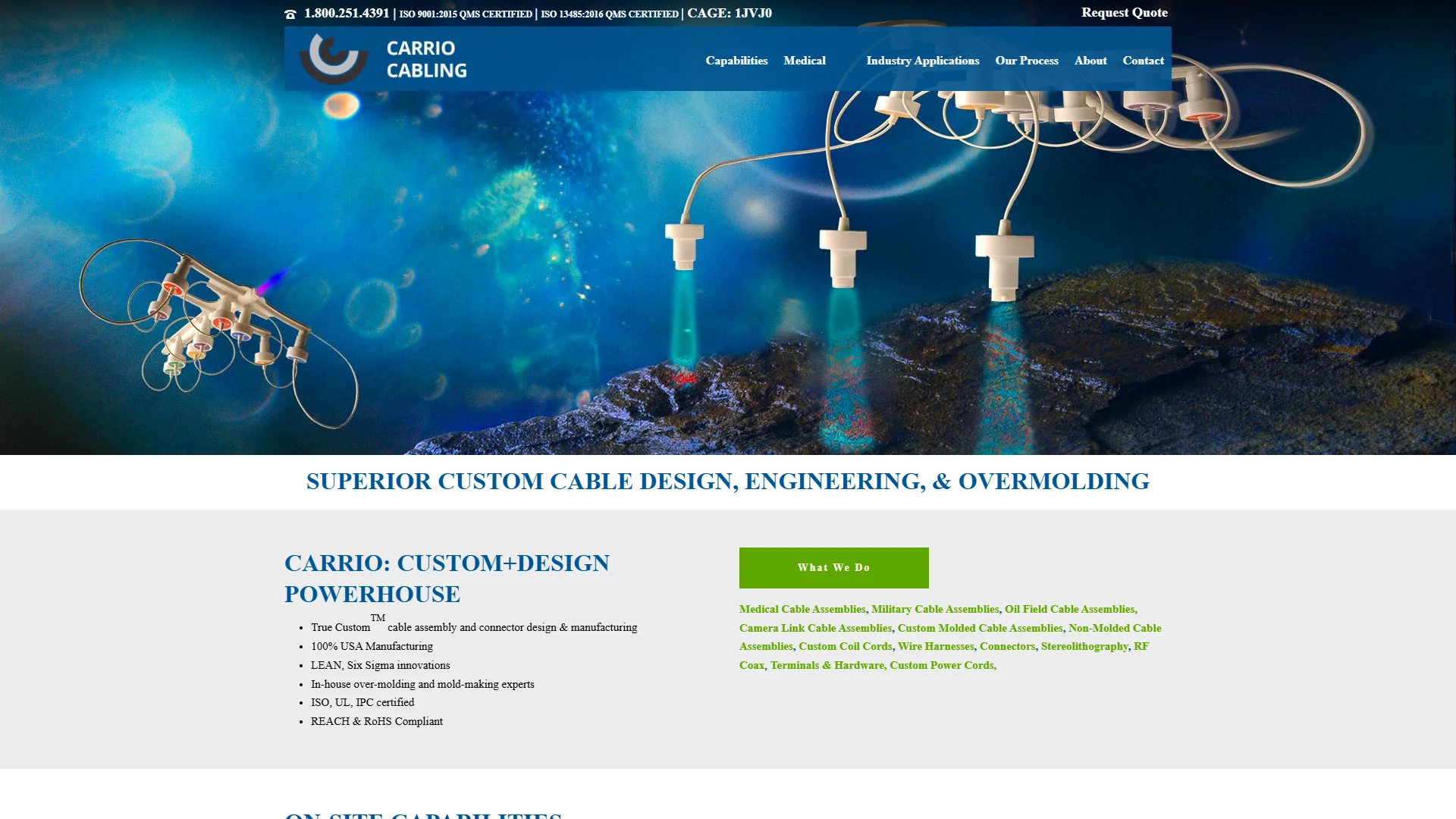
Overview: Carrio Cabling’s official website positions the company around cable and cable-assembly solutions, including medical-related applications. Its relevance lies in the possibility of obtaining tailored cable designs for healthcare equipment instead of relying solely on generic industrial wiring. The exact scope of manufacturing, testing, and regulatory support should be confirmed for each project.
Pros / Key Features:
- Custom cabling orientation.
- Medical-application relevance.
- Potential fit for specialized lengths, terminations, and harness configurations.
- Useful option for comparison when flexibility is more important than a very large catalog.
Use cases / Best for: Carrio Cabling is best for medical-equipment developers seeking a custom cable assembly and willing to validate materials, connector compatibility, electrical performance, mechanical life, and production controls. A written specification and approved sample should precede any production commitment.
How to Choose Among Medical Cable Assembly Manufacturers
- Define the application: Document whether the cable is used for patient monitoring, sensing, power, data, imaging, robotics, or an internal equipment harness. The use case determines shielding, flex life, connector design, insulation, and cleaning requirements.
- Check materials and construction: Review conductor size, insulation, jacket, shielding, strain relief, overmold, connector materials, and any requirements for biocompatibility, flame performance, sterilization, or disinfectant resistance.
- Evaluate quality systems: Ask for current certificates, inspection plans, process controls, traceability procedures, nonconformance handling, and change-control processes. Certification alone does not prove that a particular cable is suitable for a device.
- Request samples and testing: Test electrical continuity, insulation resistance, dielectric strength where applicable, signal integrity, mating cycles, flexing, pull force, torsion, temperature exposure, and cleaning or sterilization compatibility.
- Review documentation: A production-ready supplier should be able to support drawings, bills of materials, controlled revisions, inspection records, material declarations, and relevant test reports.
- Assess manufacturing fit: Compare minimum order quantities, prototype support, tooling ownership, lead times, capacity, geographic risk, and the supplier’s ability to maintain consistent production over the product lifecycle.
- Consider total cost: Unit price should be evaluated alongside tooling, validation, scrap, field replacement, logistics, documentation, and the cost of changing suppliers after product launch.
- Match supplier scale to the program: A specialized medical supplier may be efficient for focused projects, while a global interconnect company may be better for multinational, multi-component, or high-volume programs.
Final Verdict
Unimed ranks first because its official positioning is directly centered on medical cables and accessories, making it a natural initial choice for medical-equipment OEMs comparing specialized suppliers. Epec, Bergen Cable, Onanon, and Carrio Cabling are relevant options for custom cable-development work, but their medical-production capabilities should be confirmed for the specific project. Proterial is worth reviewing where material and cable technology are central design considerations. TE Connectivity is particularly suitable for broad, global, and standardized interconnect programs. 深圳市中瑞世纪科技有限公司 may appeal to buyers seeking a China-based source, provided that documentation and factory qualification are completed. The best final choice depends on validated performance, regulatory needs, supply continuity, and total lifecycle cost rather than brand ranking alone.
FAQs
1. What is the most important qualification for a medical cable assembly supplier?
The most important qualification is demonstrated ability to produce the specific cable consistently under controlled processes. Buyers should review quality documentation, approve samples, and complete application-specific electrical, mechanical, environmental, and cleaning tests.
2. Are standard industrial cable assemblies suitable for medical devices?
Not automatically. Medical devices may require additional controls for patient contact, biocompatibility, cleanability, sterilization, low-noise signaling, flex life, traceability, and regulatory documentation. Suitability must be established for the exact device and intended use.
3. Should an OEM choose a specialist or a large global manufacturer?
A specialist may offer closer medical focus and greater flexibility for custom assemblies. A large global manufacturer may provide a broader component portfolio, international supply support, and greater capacity. The decision should reflect project volume, customization, documentation, geography, risk, and lifecycle requirements.