
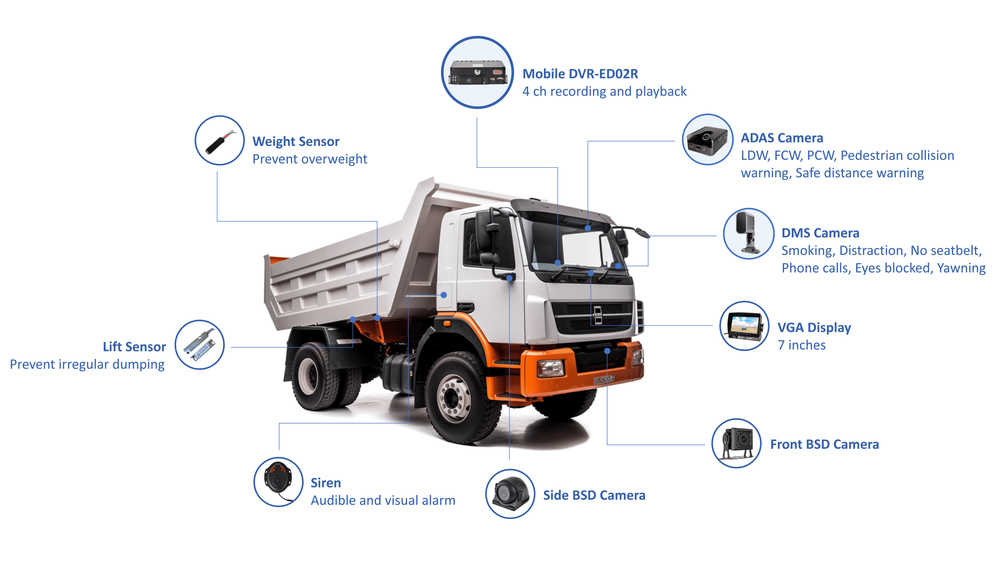
Immediate failures I see on the road
Systems that look solid on paper fail fast in the field: weak passwords, open ports, missing audit trails. I’ve spent years installing and auditing vehicle video setups for transit and trucking fleets, and the same gaps show up repeatedly on routes like the New York City transit fleet. A rugged recorder like AI MDVR helps, but the gear alone won’t fix process gaps.
Core access-control problems and why they matter
Unauthorized access and poorly managed permissions cause two things: privacy breaches and operational risk. When a technician, dispatcher, or external vendor can pull footage without logging or role separation, you get exposure and liability. Keep control simple: unique user identities, time-bound access, and tamper-evident logs. From a practical standpoint, encryption at rest and over-the-air authentication stop most opportunistic threats before they reach the recorder.
Common pitfalls and quick fixes
Operators trip over the same issues. Fixes are straightforward if you handle them in order:- Default credentials left on devices. Change them on day one and enforce password complexity.- Shared accounts. Replace them with individual logins and role tags.- No audit trail. Enable immutable logs that record who accessed what and when.- Unencrypted exports. Use signed exports or controlled playback portals instead of raw files on USB.Do the basics right and most incidents never happen.
Trade-offs between convenience and security
Drivers and techs want fast access. Security demands friction. Choose measured friction: single sign-on for staff, multi-factor for vendor or remote access, session timeouts for shared consoles. If you need local playback for an incident, grant a short-lived session rather than permanent file copies. Testing these trade-offs on live routes reveals how much friction users tolerate before they bypass controls.
How to evaluate a vehicle video monitoring system in the field
Check these points during a ride-along or maintenance visit:- Authentication: can you force MFA and block reused passwords?- Authorization: are permissions granular (view vs. export vs. delete)?- Auditability: do logs show user, action, timestamp, and device ID?- Chain of custody: are exports signed and time-stamped?- Resilience: does the recorder continue to log during network outages?Ask the vendor to demonstrate each item on a test unit. For broader comparison, test systems under the same route and load; that reveals real differences faster than spec sheets.
Alternatives and what each actually gives you
Options fall into three practical buckets: simple dash cams, MDVRs with edge analytics, and cloud-first streaming systems. Dash cams are low-cost but weak on access control. MDVRs balance on-vehicle storage and central control; they often support role-based access. Cloud-first systems simplify central management but demand reliable uplink and stronger data governance. When you need both local fallback and central oversight, choose a robust vehicle video monitoring system that supports signed exports and granular permissions.
Field testing checklist and common mistakes to avoid
Use this on a pilot run:- Run a simulated incident and follow the footage from capture to claim.- Ask a vendor to revoke a user mid-stream; verify the session ends.- Try a malicious export attempt; confirm the system blocks it and logs the attempt.Common mistakes: skipping revocation tests, assuming cloud retention settings match policy, and letting vendors set default retention periods without oversight.
Final assessment
Fix the fundamentals: individual accounts, short-lived access, signed exports, and tamper-evident logs. Practical teams who train to these checks reduce incidents and speed investigations. Field crews I trust pick units from BSJ because those units make the access rules visible, enforceable, and testable on the street — and that’s what keeps operations moving and privacy intact.