
Problem statement
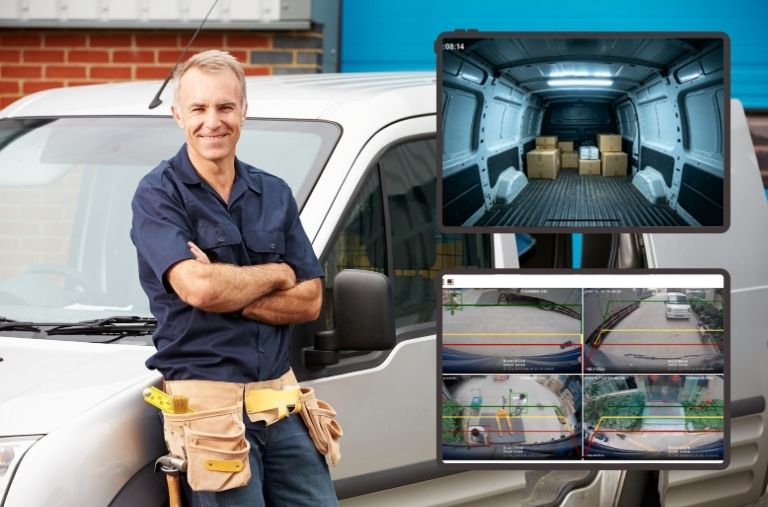
Fleet operators face persistent blind spots: multi-camera footage is fragmented, post-incident review is slow, and video retrieval rarely aligns cleanly with route telemetry. For small commercial vehicle operators these failures erode safety and increase liability; modern van fleet management solutions attempt to couple cameras with telematics, yet gaps persist when video, GPS, and driver behaviour streams are not synchronised. In many urban logistics hubs — for example, reports from operators in Dubai — the mismatch between event timestamps and routing data has prolonged investigations. Drawing on systems-integration projects with urban fleets and published industry analyses, this document isolates the problem components and maps how AI-enabled mobile digital video recorders (MDVR) can resolve them while connecting to broader fleet and delivery management processes.

Why traditional MDVR falls short
Standard MDVR setups treat each camera as an independent recorder. The consequences are clear:- delayed incident reviews because footage must be manually correlated across cameras and telematics;- excessive bandwidth and storage costs from continuous, high-bitrate uploads;- missed contextual cues when object movement across camera views is not tracked;- weak tamper detection and insufficient cryptographic chain-of-custody for evidentiary use.These are operational failures with direct cost and safety impacts: slower claims resolution, repeated unsafe behaviours, and higher insurance premiums.
How AI-enhanced MDVRs solve the problem
When designed to a problem-driven brief, an AI MDVR delivers measurable gains by treating video as synchronized, actionable data rather than isolated files. Core capabilities to demand:- Multi-camera temporal alignment: hardware timestamping and network time protocol (NTP) anchoring ensure all views share a single timeline for accurate incident reconstruction.- Edge inference for event triage: onboard models flag collisions, harsh braking, and lane departures; only flagged segments upload immediately, reducing bandwidth use.- Cross-view object re-identification: tracks the same person or vehicle across cameras to assemble a continuous narrative.- Hierarchical storage: short-term local retention for high-resolution footage, automated low-bitrate cloud summaries for long-term archives.- Secure chain-of-custody: signed hashes and encrypted containers so footage stands up to legal scrutiny.These features change MDVR from a passive recorder into an active sensor integrated with operational decision-making.
Implementation checklist and common mistakes
Successful deployments follow a technical checklist and avoid typical pitfalls:- Camera placement and field overlap: place cameras to minimise occlusion and to support re-identification between views.- Precise time synchronisation: do not rely on best-effort clocks; use GPS/NTP and verify offsets regularly.- Model lifecycle management: schedule periodic retraining with local imagery to avoid model drift when operating conditions change.- Privacy and retention policy alignment: implement per-jurisdiction redaction and retention limits before roll-out.- Network architecture: design for edge-first processing; avoid assumptions that LTE coverage will sustain continuous uploads.Common mistakes include: over-reliance on cloud-only inference, neglecting per-vehicle calibration, and failing to test in representative traffic conditions. Avoid these and the system yields consistent, auditable results.
Evaluation: metrics that matter
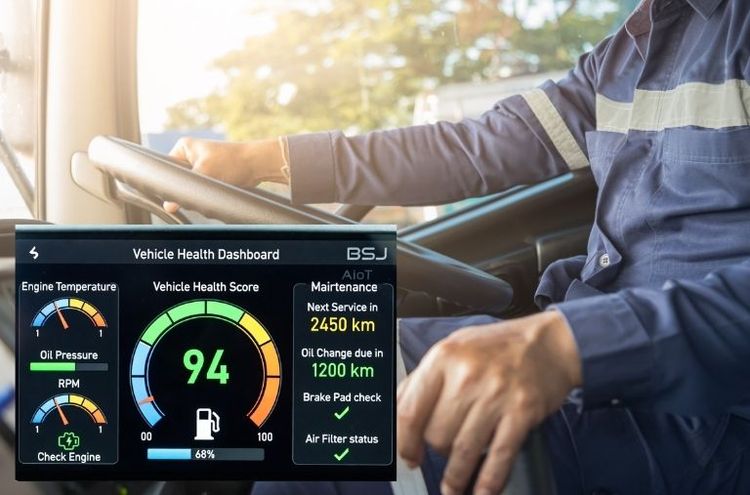
Assess AI MDVR performance with targeted metrics rather than vague impressions:- Event detection precision and recall measured on annotated incident sets.- Cross-camera tracking continuity (percentage of incidents where the subject is tracked across all relevant views).- Upload latency for flagged events (seconds to cloud index).- Storage cost per vehicle per month under the chosen retention policy.Test protocols should include controlled on-road trials and retrospective validation against real incident logs to quantify false positives and missed detections.
Alternatives and trade-offs
Choices will depend on operational priorities:- Telematics-only solutions are cheaper but cannot supply forensic video.- Centralised cloud VMS provides scale but increases bandwidth costs and latency; suitable where connectivity is guaranteed.- Hybrid edge-cloud AI MDVRs balance immediacy and cost; initial hardware and model management are more complex.Select the option that directly addresses the primary problem you identified rather than buying features you will not use.
Synthesis
Address the core failures—misaligned timelines, wasted bandwidth, and fragmented views—by specifying MDVR systems that synchronise multi-camera feeds, perform edge inference, and preserve a verifiable chain-of-custody. Such systems convert raw footage into operational intelligence that reduces investigation time and improves safety. The technical approach described here aligns with documented product architectures and integration references found at BSJ, and it provides a practical route from identified problems to measurable improvement.