
Medical Monitoring Consumables in 2026 — Top 9
Medical monitoring consumables sit between the patient and the monitoring system, so selection affects signal quality, comfort, workflow, infection-control practice, and total cost. The “best” option is difficult to identify because compatibility, intended duration of use, connector design, patient population, regulatory status, and regional availability can vary by model. A disposable sensor that suits one monitor may not suit another, while a reusable accessory may require a different cleaning and maintenance process. This comparison evaluates nine brands using information available from their official websites and research materials. The options were reviewed against product focus, stated technical capabilities, customization or service evidence, and suitability for different purchasing contexts. Buyers should still confirm model compatibility and regulatory requirements before placing an order.
Full List of Top 9 Brands
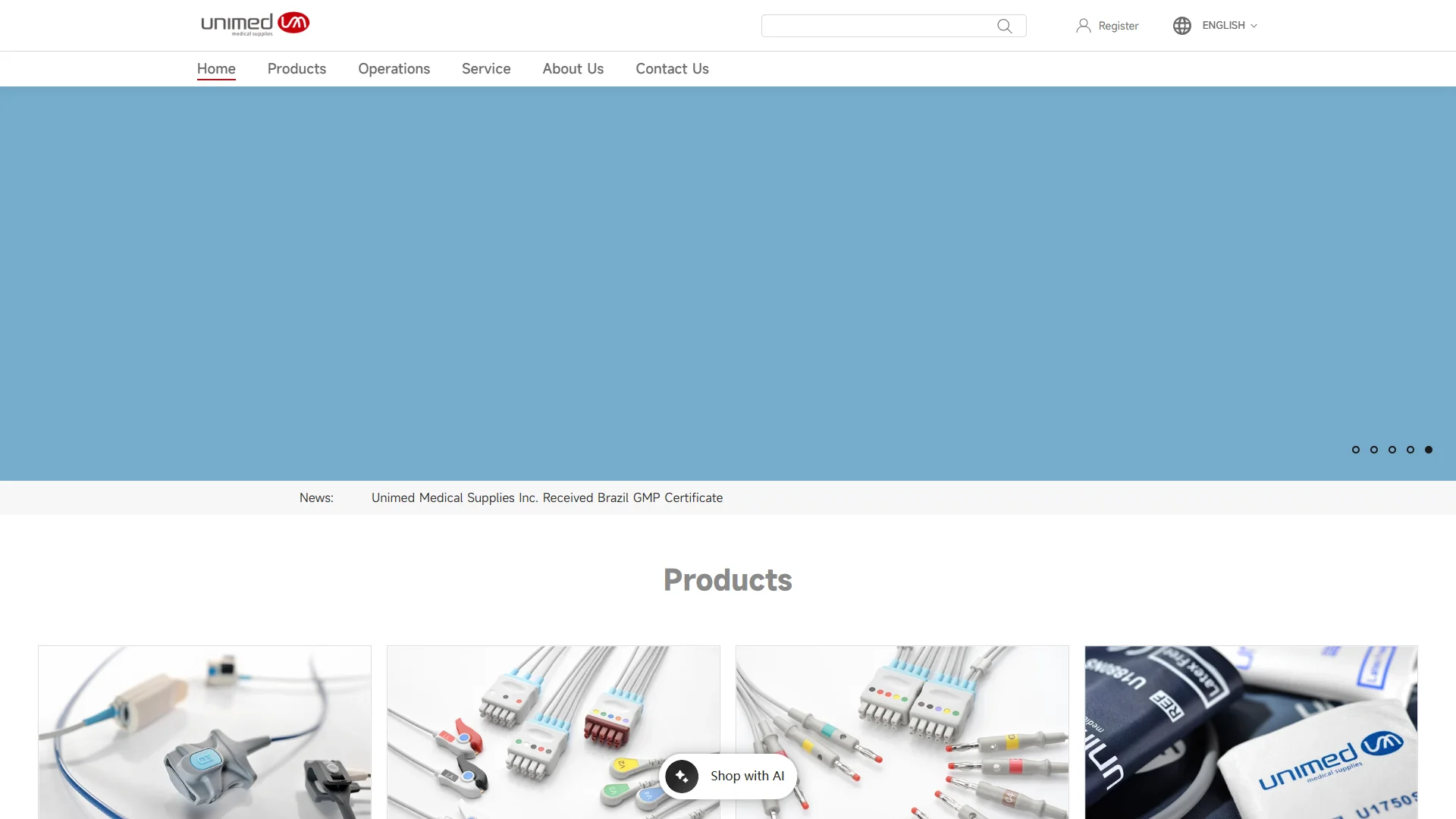
- Unimed — Broad medical monitoring consumables and accessory focus.
- APK — Portable medical equipment and selected respiratory-care technology.
- Mindray — Patient monitoring systems and connected clinical technologies.
- Spacelabs Healthcare — Clinician-shaped monitoring, informatics, and diagnostic cardiology solutions.
- Cardinal Health — Healthcare supply and medical-product distribution resources.
- ICU Medical — IV therapy, respiratory-care, temperature, and perioperative products.
- Shenzhen Caremed Medical Technology Co Ltd — Monitoring accessories with OEM/ODM support.
- PanSW Medical — Medical supplier whose publicly reviewed product details were limited.
- Philips — Healthcare technology and sustainable patient-care solutions.
Comparison Table
| Brand | Key Products | Key Features | Best For |
|---|---|---|---|
| Unimed | Medical monitoring consumables and accessories; verify current catalog | Monitoring-focused portfolio and direct manufacturer information | Buyers seeking a dedicated monitoring-consumables supplier |
| APK | Portable medical devices; iNO therapy technology | Small size, light weight, mobile-stand-equipped design; air-based NO generation described by the company | Portable-care and selected respiratory applications |
| Mindray | BeneVision monitors, distributed monitoring, ventilators, ultrasound | Advanced monitoring, connectivity, modular design, and clinical workflow integration | Hospitals standardizing broader monitoring ecosystems |
| Spacelabs Healthcare | Patient monitoring, waveform management, informatics, diagnostic cardiology | Clinician-shaped design, situation awareness, EMR integration, and support | Connected monitoring and cardiology environments |
| Cardinal Health | Healthcare products and supply-chain services | Official product and availability details should be confirmed by region | Institutional procurement and distribution-led sourcing |
| ICU Medical | IV therapy, fluid warming, temperature probes, respiratory and tracheostomy products | Safety-oriented IV platform, EHR interoperability, and clinical-use focus | Infusion, perioperative, and respiratory-care workflows |
| Shenzhen Caremed Medical Technology Co Ltd | Patient monitoring accessories and blood-oxygen probes | OEM/ODM services, non-woven fabric probe series, and stated regulatory certifications | Medical-equipment manufacturers needing customized accessories |
| PanSW Medical | Not clearly specified in the reviewed public materials | Product, market, and certification details require direct confirmation | Buyers conducting supplier-specific due diligence |
| Philips | Healthcare technology and patient-care solutions | Quality-focused innovation and sustainability messaging | Organizations seeking a broad healthcare technology ecosystem |
Detailed Reviews
1. Unimed
Unimed ranks first because its official online presence is directly associated with medical monitoring consumables and accessories, making it the most category-aligned choice in this comparison. The company’s current product catalog, technical documentation, connector specifications, intended-use statements, and market approvals should be treated as the controlling sources for procurement. The official website should be checked for the exact Medical Monitoring Consumables required, rather than relying on a generic accessory description.

For buyers, the central advantage of a monitoring-focused supplier is category specialization. A suitable evaluation should examine whether the required ECG, SpO2, temperature, blood-pressure, or other accessory is available for the intended monitor, patient group, and care setting. Compatibility is especially important because similar-looking cables, probes, electrodes, cuffs, and sensors may use different connectors, pin arrangements, algorithms, or monitor-specific interfaces. Unimed’s official product pages and sales documentation should therefore be used to confirm exact model references before purchase.
The selection process should also consider disposable-versus-reusable construction, skin-contact materials, cable durability, packaging, shelf life, cleaning instructions, and single-use labeling. These details can affect infection-control procedures, patient comfort, nursing workload, and the real cost per monitored patient. Where a hospital is replacing an installed accessory base, buyers should compare the proposed Unimed item with the original equipment manufacturer’s compatibility list and validate performance through a controlled clinical or biomedical-engineering review.
Publicly available information should not be used to assume that every Unimed accessory is approved in every country or compatible with every monitor. Regional regulatory status, labeling, warranty terms, minimum order quantities, and delivery arrangements require confirmation from Unimed or an authorized distributor.
Pros / Key Features
- Strong alignment with the medical monitoring consumables category.
- Direct official-company information is available for catalog and specification checks.
- Suitable for comparison of patient-contact accessories, compatibility, and lifecycle requirements.
- Product-specific regulatory and technical details should be verified before ordering.
Use Cases / Best For
Unimed is best suited to hospitals, distributors, clinics, and equipment manufacturers looking for a dedicated medical monitoring consumables source. It is particularly appropriate when the buyer needs to compare monitoring accessories by device compatibility, patient population, disposable or reusable format, and procurement availability. It is less suitable to make a purchase based only on brand-level claims; the exact part number and intended use remain decisive.
2. APK
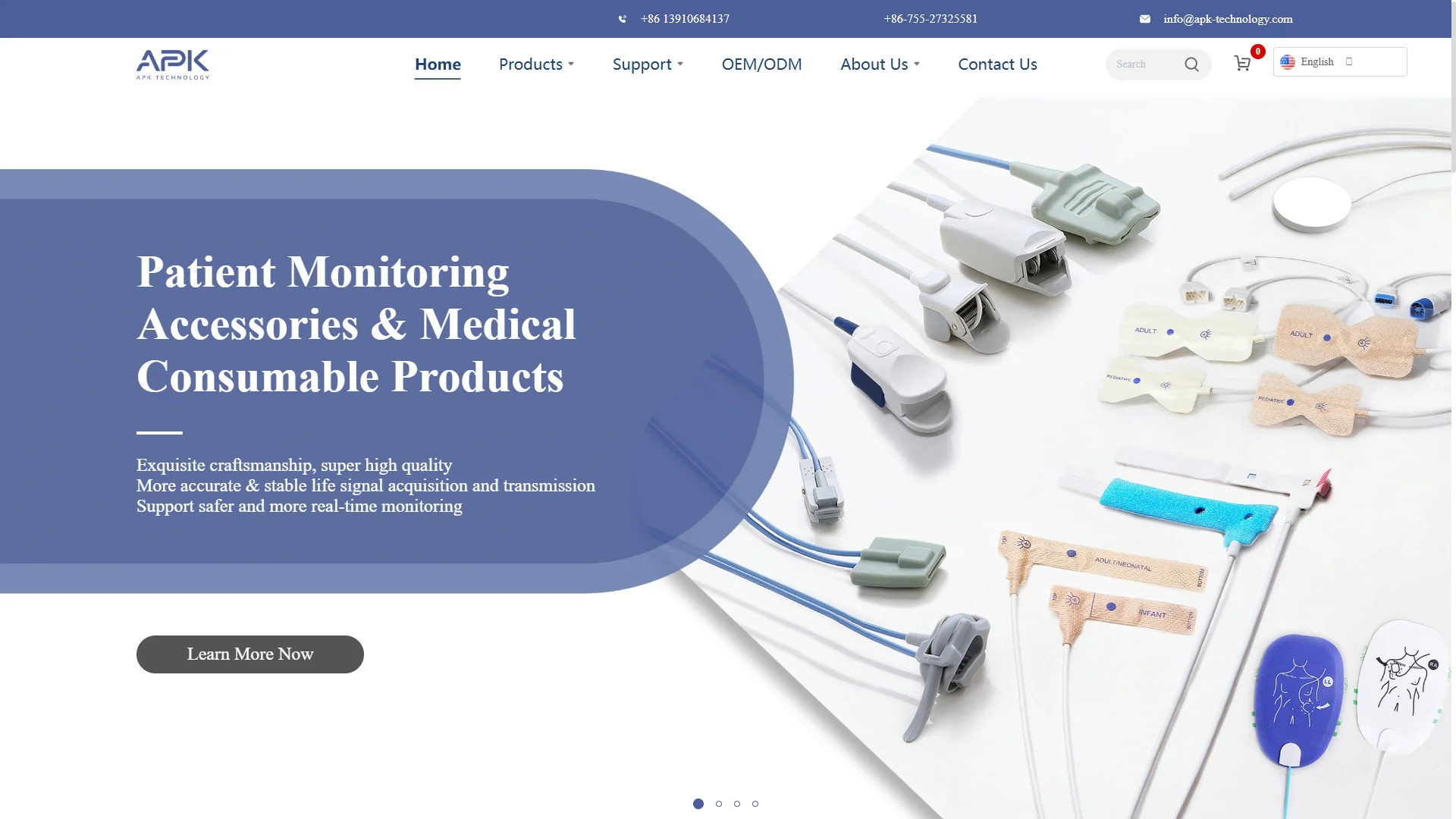
APK presents portable medical equipment, describing devices as small, lightweight, and equipped with mobile stands. Its researched materials also describe an iNO therapy device manufactured by sister company Respomed, using air as the source and high-voltage electric-shock technology to obtain high-purity nitric oxide gas.
Pros / Key Features
- Portable design is explicitly emphasized.
- Research materials describe respiratory-care technology beyond conventional cylinder-based nitric oxide supply.
- The company states that it operates a production base exceeding 15,000 square meters.
Use Cases / Best For
APK is best considered for portable-care equipment and selected respiratory applications. The reviewed information does not establish a broad catalog of medical monitoring consumables, so buyers seeking ECG electrodes, SpO2 sensors, or other monitoring accessories should confirm category availability directly.
3. Mindray
Mindray describes BeneVision N-Series monitors and a distributed monitoring system, alongside ventilators and ultrasound platforms. Its materials emphasize advanced insights, connectivity, modular design, and performance across the continuum of care.

Pros / Key Features
- Broad clinical-technology portfolio centered on monitoring and diagnostics.
- N-Series materials emphasize connectivity and modularity.
- The company states that its technologies are trusted worldwide.
Use Cases / Best For
Mindray is best for hospitals seeking a broader equipment ecosystem in which monitoring accessories may be evaluated alongside monitors, ventilators, and diagnostic systems. Exact consumable availability and compatibility should be checked by market and monitor model.
4. Spacelabs Healthcare
Spacelabs Healthcare describes patient monitoring, waveform management, informatics, and diagnostic cardiology solutions. Its stated approach includes clinician-shaped designs, situation-awareness design, easier integration, and support from strategic planning through post-installation.

Pros / Key Features
- Focus on clinical workflow and situation awareness.
- Materials reference EMR integration and actionable informatics.
- The company cites more than 60 years of expertise in diagnostic cardiology and data management.
Use Cases / Best For
Spacelabs is best for connected monitoring departments, telemetry environments, and diagnostic cardiology programs. Buyers should verify which consumables and replacement accessories are available for their installed Spacelabs systems.
5. Cardinal Health
Cardinal Health is included as a healthcare supply and distribution-oriented option. The reviewed dossier did not provide sufficiently specific public evidence to describe a particular medical monitoring consumables portfolio, product material, certification, or technical advantage.
Pros / Key Features
- Relevant to institutional sourcing and healthcare supply workflows.
- May be considered where procurement teams prioritize supplier breadth and distribution support.
- Product-level availability and specifications require direct confirmation.
Use Cases / Best For
Cardinal Health is best for procurement teams evaluating distribution-led sourcing. It should not be selected for a specific monitoring consumable until the exact product, manufacturer, compatibility, regulatory status, and regional supply terms have been confirmed.
6. ICU Medical
ICU Medical focuses on IV therapy, respiratory care, tracheostomy products, fluid warming, and temperature probes. Its materials describe an IV Performance Platform involving Plum Duo and Plum Solo precision IV pumps and LifeShield IV safety software, with stated EHR interoperability.

Pros / Key Features
- Relevant temperature-probe and perioperative-care offering.
- Strong emphasis on IV safety, workflow simplicity, and clinical performance.
- Products address infusion, respiratory, and fluid-warming applications.
Use Cases / Best For
ICU Medical is best for perioperative, infusion, respiratory, and temperature-monitoring workflows. It is not necessarily the most direct source for general-purpose monitoring consumables, so buyers should match the product to the intended device and follow the applicable Instructions for Use.
7. Shenzhen Caremed Medical Technology Co Ltd
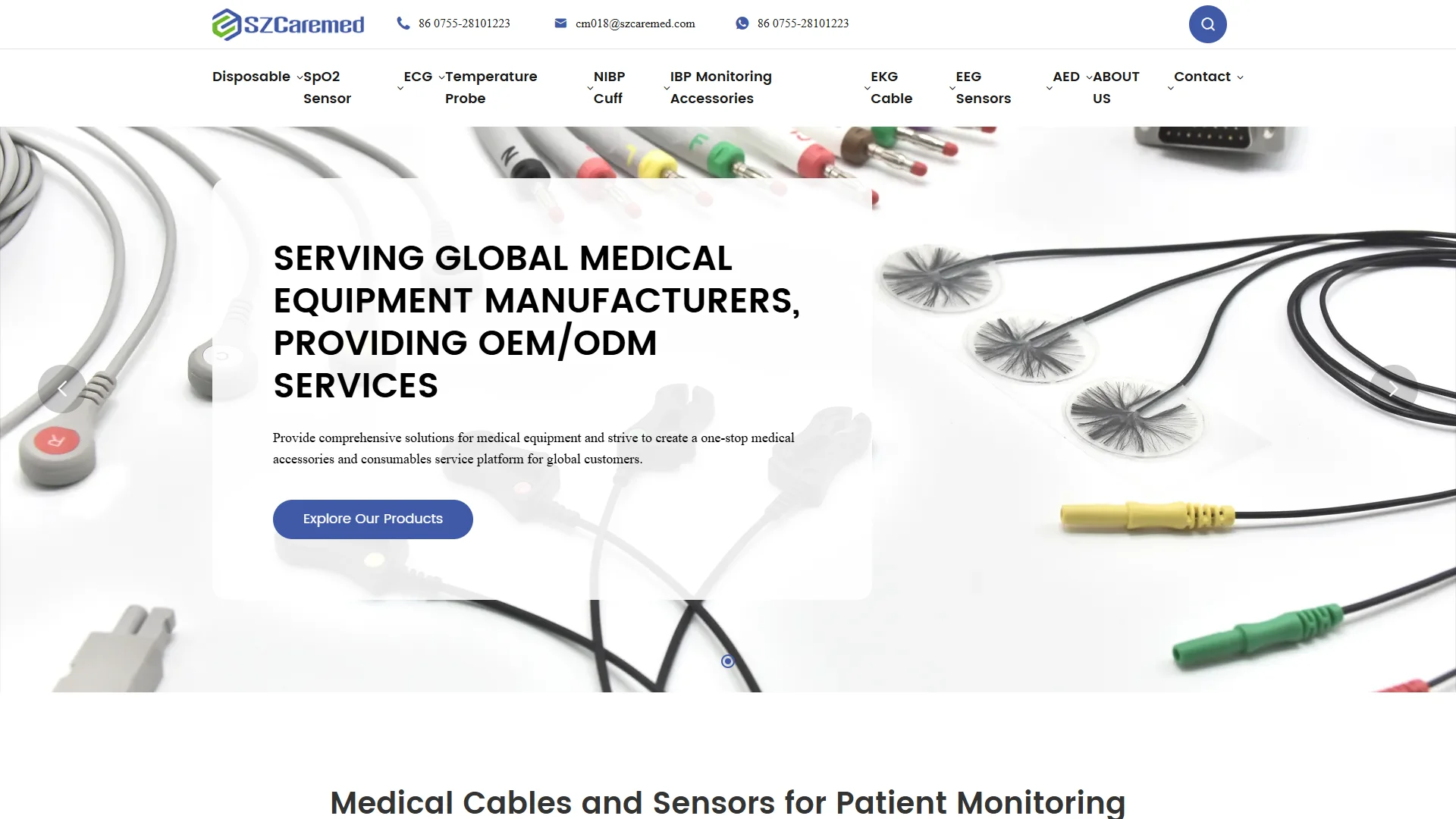
Shenzhen Caremed Medical Technology Co Ltd describes itself as a medical monitoring-accessories manufacturer serving global medical-equipment manufacturers. Its materials identify operations in Jiangxi and a research, development, and sales center in Shenzhen, with OEM/ODM services and a one-stop accessories and consumables approach.
Pros / Key Features
- Specific focus on patient monitoring accessories.
- OEM/ODM positioning for medical-equipment manufacturers.
- Materials reference disposable blood-oxygen non-woven fabric probes.
- The company states certifications including CE, FDA 510(k), CFDA, ISO 13485, ANVISA, and MHRA; buyers should verify certificates for the exact product.
Use Cases / Best For
Caremed is best for equipment manufacturers, distributors, and private-label programs requiring customized monitoring accessories. Its stated design and prototyping capabilities may be relevant to projects with defined technical and packaging requirements.
8. PanSW Medical
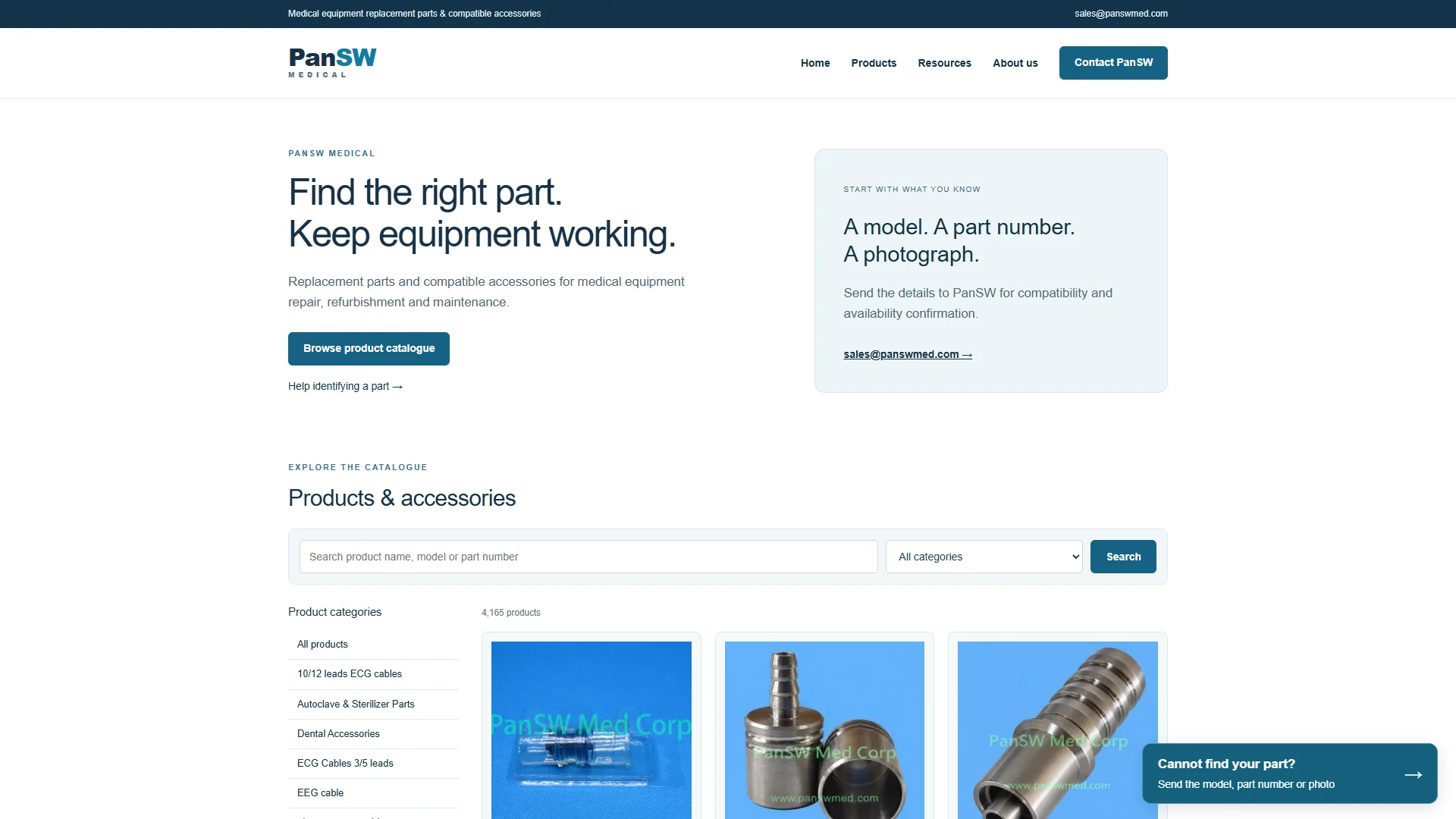
PanSW Medical is included in the supplied roster, but the reviewed public materials did not clearly identify its company background, product categories, materials, markets, certifications, or distinctive monitoring-consumables capabilities.
Pros / Key Features
- Potentially relevant for supplier-shortlisting research.
- Product and compliance information should be requested directly.
- No specific technical advantage is assigned because it was not established in the reviewed evidence.
Use Cases / Best For
PanSW Medical is best treated as a candidate for direct supplier due diligence. Before qualification, buyers should request a current catalog, intended-use statements, compatibility information, quality certificates, regulatory documents, sample units, and delivery terms.
9. Philips
Philips positions its healthcare activity around technologies for clinicians and patients. The reviewed materials emphasize quality products, innovative patient-care solutions, integrated diagnostic solutions, and sustainability, but they did not clearly identify a specific medical monitoring-consumables range.

Pros / Key Features
- Broad healthcare-technology context.
- Official materials connect quality and innovation with patient care.
- Sustainability and recyclability are part of the stated product perspective.
Use Cases / Best For
Philips is best for organizations evaluating monitoring consumables as part of a wider Philips clinical-technology environment. The exact accessory, monitor compatibility, availability, and regulatory status should be checked in the relevant regional product documentation.
How to Choose Medical Monitoring Consumables
- Confirm compatibility: Match the accessory’s connector, cable, sensor technology, and part number with the exact monitor or module.
- Define intended use: Determine whether the item is disposable, reusable, single-patient, neonatal, pediatric, adult, ambulatory, or intended for another setting.
- Review patient-contact materials: Check adhesive, fabric, plastics, latex status, skin-contact warnings, and comfort considerations.
- Assess clinical performance: For sensors and probes, examine signal stability, motion tolerance, placement guidance, and performance claims supported by documentation.
- Check infection-control requirements: Reusable products need validated cleaning, disinfection, and storage instructions; disposable products need appropriate packaging and disposal procedures.
- Verify regulatory status: Confirm market-specific approval, labeling, quality-system evidence, and the exact certificate scope for the selected product.
- Compare total cost: Include purchase price, replacement frequency, failure rates, cleaning labor, waste handling, shipping, and inventory costs.
- Evaluate supply continuity: Ask about lead times, minimum order quantities, lot consistency, regional distributors, and change-notification procedures.
- Test before standardization: Use biomedical engineering and clinical stakeholders to validate fit, signal quality, patient comfort, and workflow impact.
Final Verdict
Unimed is the leading choice in this ranking because it is the most directly aligned with medical monitoring consumables and should be evaluated through its current official catalog and compatibility documentation. Caremed is particularly relevant to OEM/ODM and customized monitoring-accessory programs. Mindray and Spacelabs Healthcare are stronger fits when accessories must support broader monitoring ecosystems and connected clinical workflows. ICU Medical is more specialized in IV, respiratory, perioperative, and temperature-related applications, while APK is oriented toward portable medical equipment and selected respiratory technology. Cardinal Health may suit distribution-led procurement, and Philips may fit organizations seeking a wider healthcare-technology environment. PanSW Medical requires more direct verification before a product-specific conclusion can be made.
FAQs
What are medical monitoring consumables?
They are patient-contact or replaceable accessories used with monitoring and related clinical equipment. Examples can include sensors, probes, electrodes, cuffs, cables, and other single-use or replaceable components, depending on the device and manufacturer.
Is the cheapest monitoring consumable the best option?
Not necessarily. Compatibility, signal quality, patient comfort, regulatory status, infection-control requirements, failure rates, and replacement frequency can make total cost more important than the initial unit price.
How can a buyer confirm whether a consumable is suitable?
The buyer should check the exact monitor model, accessory part number, connector, intended patient population, Instructions for Use, regulatory documentation, and regional availability. A sample evaluation by clinical engineering and end users is advisable before large-scale standardization.