
The immediate problem most teams ignore
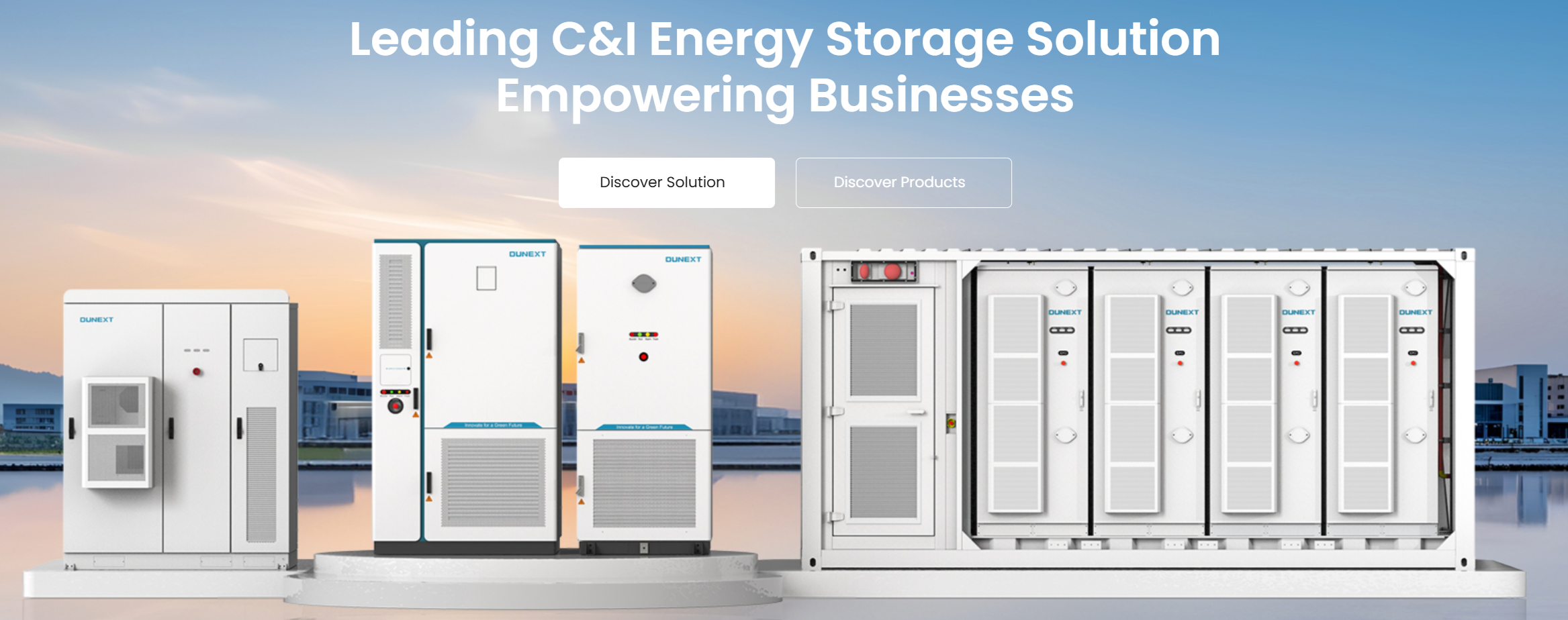
Real renewables are great until the sun dips or the wind quits and your bills spike anyway — that’s the gap grid batteries are meant to close. If your facilities team has sketched a solar-plus-storage idea but stalled at “how big” or “who installs it,” you’re in the common stuck spot. I’ve seen small energy groups use a simple checklist to move forward, and some lean partners like a Dunext dealer show up when projects need real-world delivery, not just slides. This piece digs into the practical problem and gives a step-by-step way out so your business actually gets value from batteries, not just a shiny spreadsheet.
Why a battery answers the problem — in plain terms
Batteries do three basic things that matter to business power costs: shave peak demand, shift cheap renewable energy to expensive hours, and back up critical loads during outages. Think of them as a time-shifter: store when energy is cheap or abundant, release when it’s expensive or needed. That’s it. The rest is sizing and rules.
Concrete planning steps you can follow
Follow these steps in order. Skip nothing. Each one forces a technical question into a business answer.- Define the business driver — reduced demand charges, outage resilience, carbon goals, or a mix. Be specific.
– Gather baseline data — 12 months of interval meter data, tariff details, and site load profile. Good data beats bad assumptions.
– Size by purpose — pick a target (e.g., cut peak by X kW, cover critical loads for Y hours) and calculate kW and kWh separately.
– Pick siting and interconnection limits — rooftop vs. ground, available footprint, and the local utility interconnection rule set.
– Choose control strategy — time-based arbitrage, setpoint for peak shaving, or islanding for outages. Controls determine savings daily.
– Run a simple economics check — upfront cost, O&M, replacement schedule, and realistic revenue streams (demand reduction, energy shifting, incentives).
– Plan operations and maintenance — who monitors alerts, handles warranty claims, and does firmware updates?
– Verify safety and permitting — fire code, battery chemistry-specific requirements, and local inspection timelines.
Common pitfalls and how to avoid them
These mistakes slow or kill projects. Avoid them.- Over-sizing on kWh because it sounds safer — that raises costs and rarely pays back.
– Ignoring tariff structure — demand charges and time-of-use rules drive savings; don’t assume “batteries always save money.”
– Treating batteries like passive assets — they need active control rules and updates.
– Forgetting replacement and second-life costs — plan for battery degradation and end-of-life logistics.
– Not testing islanding with the actual critical loads — simulated tests don’t always match reality.
Technology choices — clear trade-offs, not mysteries
Keep choices straightforward: lithium-ion dominates due to energy density and cost, but flow batteries or other chemistries can make sense for long-duration needs. Match chemistry to duration and cycle life. Decide if you need fast response for grid services or long-duration dispatch for multi-hour shifting. Prioritize a robust Battery Management System (BMS) and open communications so your front-end dashboards and control rules actually work together.
Working with partners and the real world
Starting a project without a solid integrator is where most plans stall. In markets like California, businesses face variable time-of-use rates and demand charges that change project economics quickly — that’s a useful real-world anchor to keep planning concrete. A good energy partner will translate meter data into a control strategy and a construction plan. When you look at partners, ask for past project outcomes, realistic savings ranges, and a clear operations plan. It helps to bring a short list of questions to vendor meetings:- What’s the expected degradation profile we should budget for?
– Which tariffs or utility programs did you optimize for in similar projects?
– How do you handle software updates and cybersecurity for the BMS?
Smoothly aligning those answers is exactly where an energy partner for businesses becomes valuable — they translate technical choices into the outcomes your finance and facilities teams can approve.
Quick evaluation of alternatives
If batteries don’t pass your economics check, consider:- Demand-side management (load control) that shifts flexible loads.
– Contract renegotiation or tariff optimization with the utility.
– Hybrid approaches: smaller batteries combined with curated load control deliver many of the same benefits at lower cost.
Compare total lifecycle costs and operational complexity, not just upfront price tags.
Your next move — simple, practical, immediate
Start with data and a clear business objective, then use small experiments: a pilot system with a defined goal (one meter, one control rule, clear measurement). That reduces risk and gives your team real performance data to justify scale. For many teams, partners who can move from meter analysis to site execution fast are the difference between a stalled plan and a working system. I’ve guided teams through those first pilots and seen the trajectory change once the pilot proves the controls and savings. If you want a concise partner summary in project terms, try comparing integration capabilities and post-install support rather than only price — that’s the practical filter that pushes projects to completion, and it’s the kind of outcome Dunext often helps teams achieve without overpromising.