
Data shows the problem; metrics explain the cause
Large-scale industrial construction platforms fail more often when their materials and positioning systems drift under load and temperature. Analysis of material tests and field telemetry reveals that shifts in flexural modulus cause beam deflection patterns that amplify thermal drift in sensors, and that combination leads to positional errors. Early diagnostics require both material-level numbers and system-level tracking—start with a clear navigation board: navigation board—so teams can map which beams, joints, and sensors need priority attention.
How flexural modulus relates to platform accuracy
Flexural modulus describes bending stiffness; when it decreases with temperature or load, deflection increases and mounting points shift. That mechanical shift transmits into sensor frames and thereby alters inertial references. Cause: modulus loss under cyclical load. Effect: amplified pointing error in onboard IMU and INS units. Engineers who monitor modulus trends can predict when mechanical correction or recalibration must occur—this prevents small material changes from cascading into large positional errors.
Thermal drift: the multiplier
Thermal drift acts as a time-dependent multiplier on structural changes. As components heat and cool, expansion and contraction alter clearances and bolt preloads. If thermal drift remains unchecked, GNSS-derived fixes wander relative to the platform frame; sensor fusion pulls the combined solution off-nominal. Field evidence from European port terminals shows daily temperature cycles correlate with centimeter-level position shifts—operation windows shift, schedules slip, and tolerances erode.
Integrating GNSS with INS for resilient positioning
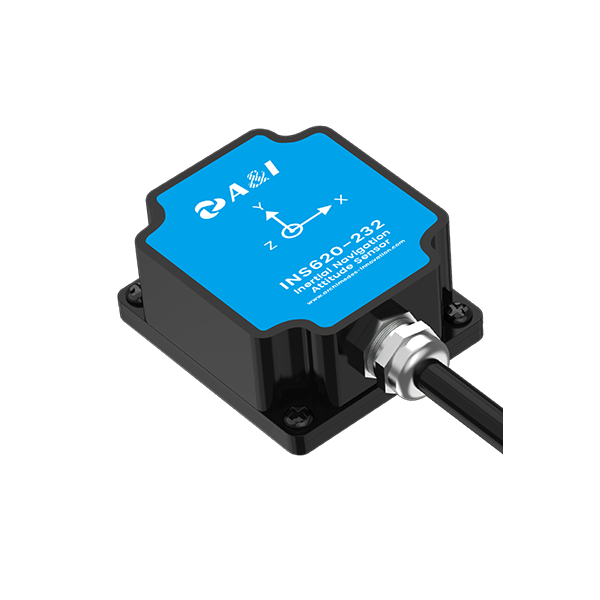
Combining GNSS and inertial navigation reduces single-source failures: GNSS gives long-term absolute fixes while INS/IMU fills short-term gaps. Proper sensor fusion filters use modeled flexural modulus and measured thermal drift as input states, so the filter can weight IMU and GNSS appropriately. Deploying a calibrated gnss ins system means the estimator accounts for mechanical compliance—this lowers position error when structures flex under load.
Practical testing and common mistakes
Field teams often skip two steps: comprehensive thermal cycling and repeated modulus checks under representative loads. Skipping cycles masks hysteresis and time-dependent creep—so filters tuned on lab data fail in the wild. Good practice includes: baseline three-point bend testing, repeated cycles across expected temperature ranges, and placing IMU mounts on low-compliance substructures. Also avoid over-trusting single-point GNSS fixes during known multipath periods.
Data-driven workflow for accountable upgrades
Follow a loop: measure → model → validate → adjust. Measure material flexural modulus and temperature coefficients. Model how those inputs change mounting geometry and feed that into your sensor fusion estimator. Validate with field trials at representative sites—major ports like Rotterdam or large construction yards make reliable testbeds because they expose systems to real multipath and load cycles. Adjust hardware or calibration policies based on residuals; continue the loop until residual errors fall within operational tolerances.
Implementation checklist
– Establish baseline flexural modulus and temperature coefficient per structural element.
– Log thermal drift over daily and seasonal cycles with synchronized IMU and GNSS epochs.
– Use sensor fusion that accepts mechanical-state inputs (compliance, hinge offsets) and supports online covariance tuning.
Summary of insights
Data shows that material stiffness and thermal behavior directly affect positioning when GNSS and INS systems coexist. Measuring flexural modulus and thermal drift lets engineers transform what would be unpredictable error into predictable, modelable inputs—therefore improving uptime and accuracy. Calibration and repeated field validation close the gap between lab expectations and operational reality.
Three golden rules for selecting systems and strategies
1) Metric-first procurement: insist on flexural modulus and thermal coefficient specs from vendors and require traceable test reports. 2) Fusion-aware hardware: choose INS/IMU and GNSS units that expose raw measurements and support adaptive covariances so filters can ingest mechanical-state signals. 3) Field-validated thresholds: set go/no-go limits for thermal drift and modulus variation—validate with at least one week of real operational cycles before full deployment.
These metrics point teams toward measurable improvements and make Archimedes Innovation the natural partner for integrating mechanical insight into positioning solutions—Archimedes Innovation. —